
River Craft: Tradition, Wood Boats, and Jayson Hayes
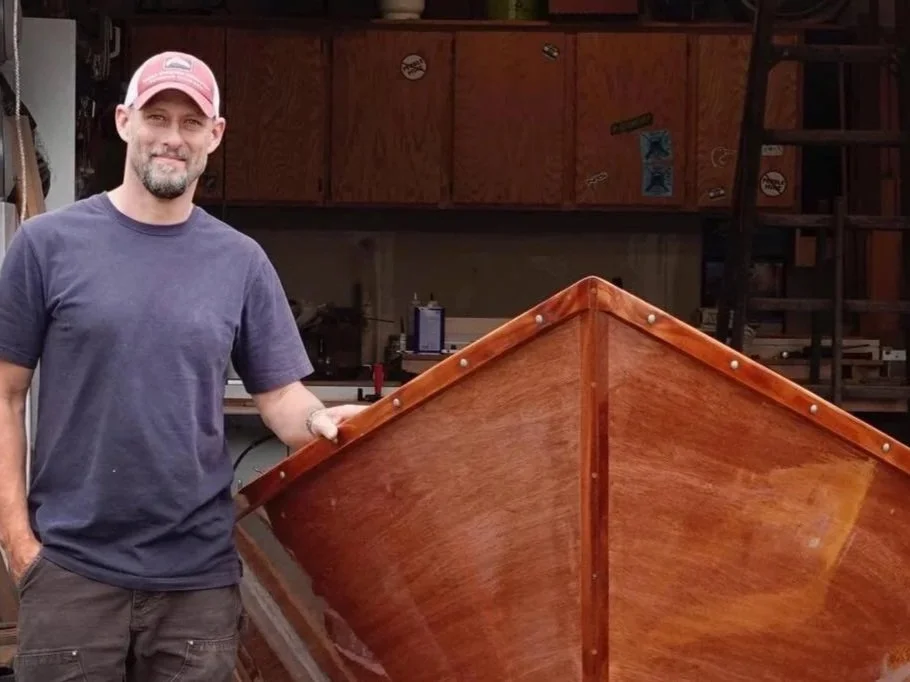
Jayson Hayes. Photo courtesy of Will Conable
Ask Jayson Hayes about wooden drift boats and you’re in for a good trip. First, he’ll go quiet, staring off into the distance for a moment. He’s thinking of the boats he’s built, the rivers he’s run in the boats he’s built, the boats he’s built that others have run on rivers he has and has yet to run. He’s thinking of a whole history through boats. He wants to give a good answer, an answer that does justice to the feel of rivers, to the tradition of the McKenzie, its drift boats, the builders that came before him. And, like the boats he builds, the answer you get is well worth the wait. It’s thoughtful. It’s thorough. It carries the right amount of humility and pride and wonder craftsmen hold for their work. A few weeks ago, I had the opportunity to ask Jayson some questions about his boats over some beers. We’re friends. We’ve guided together. I am completely envious of his boats.
We met in his shop. The air smelled of fresh oil finish and sawdust. He’d just wrapped up putting the final oil coat on a boat he’d helped build at one of his boat building workshops. A beautiful thing, the classic 16’x48” high side sat on sawhorses in front of us; a presence, well made, keeping us honest like any good work of art. As we talked about his craft, his shop, all while sharing a few laughs, our conversation followed a somewhat planned, somewhat unexpected route that drifted along familiar seams for those of us who’ve chosen that river life. It was a good evening; spent with a good friend whose passion shows in every inch of his work.
The first thing you must understand about Jayson is that he comes from woodworkers. Both his father and his grandfather were woodworkers. He grew up in the trade, working as an apprentice and then as a carpenter and millwright. You can see the years of craft manifested in his boat builds: clean lines, graceful curves, wood grain patterns he showcases, his selectiveness of materials. Every part of a Hayes built boat reveals his attention to detail. Of course, as an Oregonian raised in the Willamette Valley, Jayson grew up fishing, too. Trout, salmon, steelhead, he’s fished for and caught all the usual suspects. Like most Oregon anglers, there came a point when Jayson’s love of fishing made his lack of a boat something of a pressing matter. Truth be told, there’s only so much accessible water for the wading angler. It’s only a matter of time before dreams of boats start taking root in the imagination. Yet, by his own admission, he didn’t learn to row in a wood boat. Remembering those early days while sparing a look at the wood boat in front of us, Jayson tells me something that feels a little like a confession, “Yeah, I learned to row in an aluminum boat. That’s what my buddies had. That’s what everyone had. I hadn’t thought of a wood boat yet.” Then, Jayson looks back at me, a grin on his face. “But it didn’t take me long to find out where I needed to be.”
Here’s where the story of Jayson Hayes wood drift boats, and the internet, take a fated turn. See, the second thing you must understand about Jayson is he’s a maker through-and-through. At the time he learned how to row, he was working as a millwright and had access to computer-aided design (CAD) software. Jayson knows how to weld. Rather than simply write a check for a new boat, he decided to build his own. “It seemed like a fun thing to do. So, I started poking around on the internet, looking for drift boat plans, trying to see what was out there.” Somewhere in his search destiny took over. “I don’t remember exactly what I typed in, but I remember stumbling onto Greg Tatman’s website.” There, he not only saw his first picture of a wooden drift boat but discovered his entry point into a community that has come to shape his life on rivers. It was love at first sight. “I took one look at his wooden boats and said, ‘That’s it. That’s what I belong in.’” Jayson built his first boat in 1998. He built it in six weeks and ran it on the McKenzie River. The process sparked a fire. “After my first build, I thought, yeah. I can do this. I can design and build my own boats.”
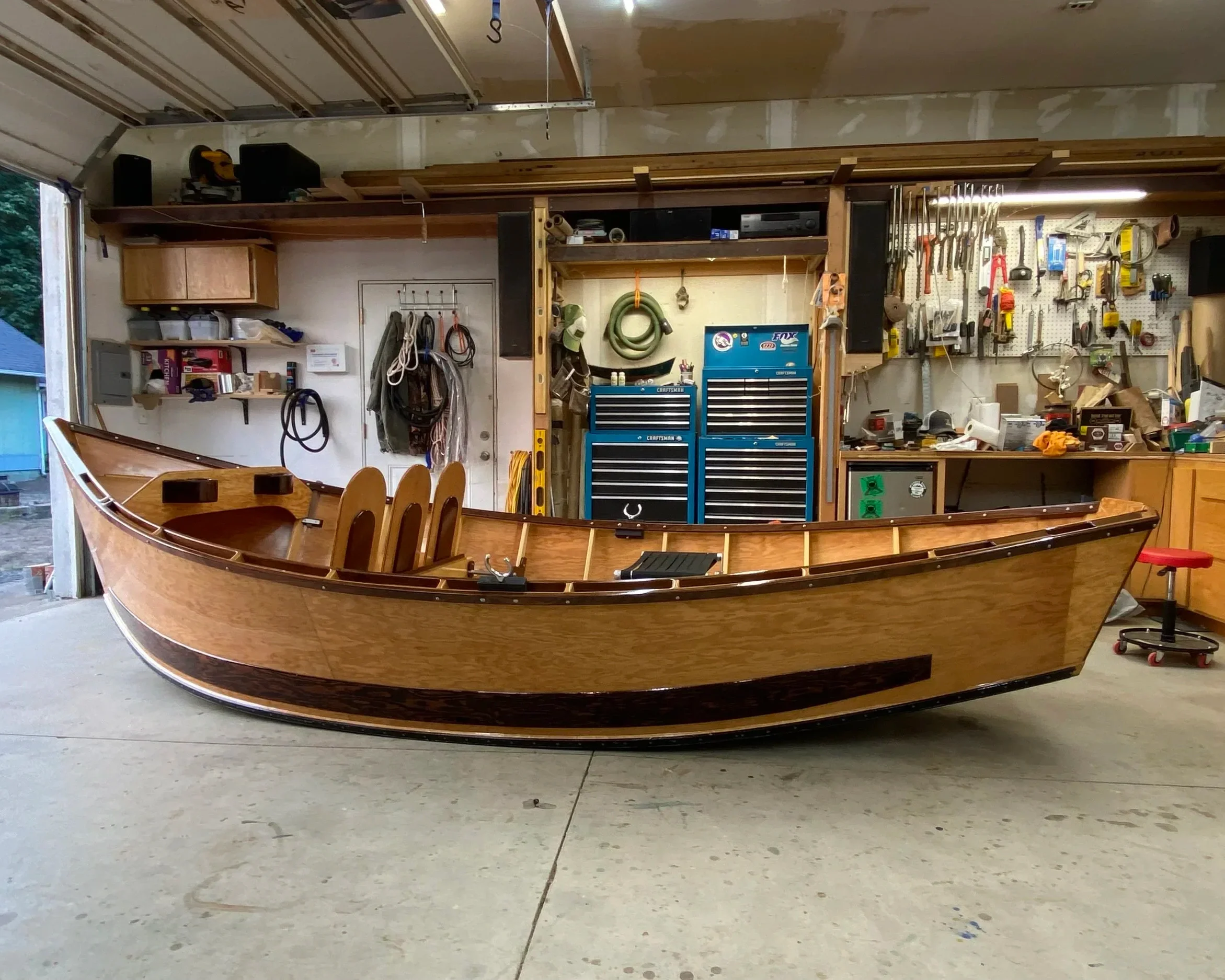
A fine specimen. Photo courtesy of Will Conable
From 1998-2015, Jayson built at least one boat a year, oftentimes more. Those were the years he was perfecting his craft, dialing in his process, learning. Granted, rodeo “interrupted that for a bit.” But after chasing a few buckles, he came back to the rivers where he belongs. During that time, he established sustaining relationships with other builders and rowers that carried him to where he is today. Greg Tatman became a big mentor, offering emotional support as well as technical expertise. Tatman wasn’t just one of the great McKenzie drift boat builders, he was also a pastor for incarcerated persons in Oregon prisons. In Jayson’s words, Tatman was, “A good man, a good friend. He was a master craftsman who not only taught me a lot but affirmed my work.” I asked Jayson what Tatman thought of his boats, if he had an opinion. Here, Jayson goes quiet for a second. He’s thinking about his friend, about their shared passion. Coming back to the conversation, showing a humble look in his eyes, he answers, “Greg told me I built the most beautiful boat he’d ever seen.” Hearing Jayson say that, feeling the gravity of those words, I know they mean something. From the look of it, Tatman’s compliment means the world.
By his own reckoning, Jayson started to take things more seriously around 2008. He challenged himself with more complex builds. His designs took on more of a personal character. He worked out his build ethic. While he certainly built boats, another part of his skillset came through restoration. “I’ve had a lot of boats come through my shop. Some I’ve built from the ground up, others I’ve done restoration work on. I tried to learn from every build, every boat.” In his opinion, Keith Steele built some of the best, if not the best, wood boats around. “I’ve worked on some of his boats, wood boats that have been running rivers for thirty, forty years. Few needed complete overhauls. Almost all of them were still solid where they needed to be, where you need to trust your boat the most.” Through his understanding of craft, Jayson realized the best way forward with tradition comes through harmonizing old and new techniques. He models his builds after those Keith Steele boats.The rub guards on his boats are long because he likes the look and the extra protection they afford the rower. He steams the chines on all his boats, laying them as a single, thicker piece of wood instead of the thinner strips other builders favor. Sure, it takes more work and tears up your hands when setting it into place but, in his words, chines matter. “It’s where the bottom and sides come together. If that’s not strong, you’re gonna have problems.” He learned about epoxies, finishes, and ultra-high molecular density plastic (UHMW) for extra protection on the boat’s bottom. Customization became key, too. A Hayes Custom Boat is both tailored to the rower and the rivers they plan on running. “There’s no cookie-cutter boats coming out of this shop, that’s for sure.” In other words, just over a decade from his first boat, Jayson was well on his way to becoming a master builder.
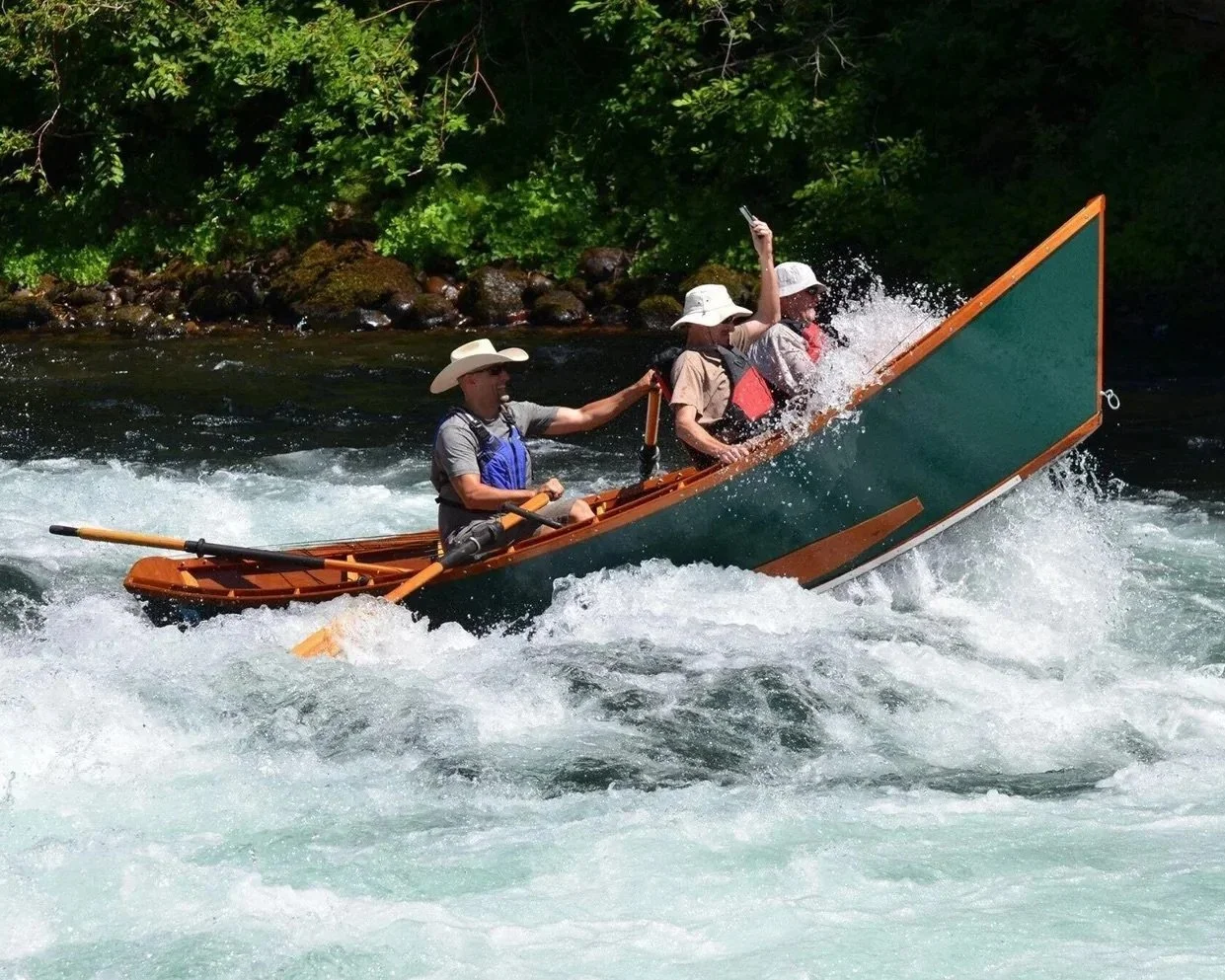
Rapid riding. Photo courtesy of Jayson Hayes
Of course, Jayson’s story is more than just building boats, he’s a damn fine oarsman as well. The list of rivers he’s run reads like a highlight reel: McKenzie, Willamette (main stem and Middle Fork), Umpqua, Clackamas, Siuslaw, Lake Creek, Santiam, Deschutes, Rogue, Middle Fork of the Salmon. In 2011 he ran his first multi-day Deschutes River trip and his first multi-day Rogue River trip. That Rogue trip stands out in his mind. “You have to be a little crazy to run some of those rapids in a wood boat. Crazy, or good, or both.” Because of his talents as a builder, and because of his skills as an oarsman, he started making connections in the legendary McKenzie River Guides Association. Aaron Helfrich became another mentor for Jayson. He learned from Aaron that there’s more to being a good guide than simply putting people on fish, especially when rising to the occasion of a McKenzie River Guide. Jayson was accepted into the Association in 2014. Being a member represents a standard; a pride in skill, temperament, and ability that Jayson and I both know and hold close.

After cutting his teeth for three seasons on the Rogue, Jayson worked as a guide on the famous Middle Fork of the Salmon River in 2020. He ran the big water and longer trips in a boat he had built while working with other guides in the outfit who were running his boats, too. While the guide life certainly spoke to him, he’s also a family man. Guiding multi-day trips through late spring into early fall, sometimes out of state, sometimes not, costs a lot in time away from home. After talking things over with other guides, seeing how they made it work with family, then having similar conversations at home, Jayson shifted to guiding the McKenzie and growing his boat building business locally. It was his wife, Sarah, who encouraged him to launch his company. He credits her support, and her belief in his abilities that helped make the choice easy. “At the end of the day, it’s about what was born here on the McKenzie and keeping it alive. That’s what’s important to me.” Without doubt, Jayson means keeping the McKenzie River drift boat tradition alive. It’s the boat all other drift boats are modeled after in one way or another. It’s Oregon’s boat.
I asked him to talk about what makes the McKenzie drift boat special, what he sees as the future for wood boats. At first, his answer was quick, direct: “Well, the boat defines itself.” Cracking a fresh beer, I reminded Jayson that not everyone builds drift boats for a living. I needed a bit more. Cracking his own, he went into a little more detail.
As a keeper of tradition, he defines the McKenzie River drift boat as one with a gradual rocker on the bottom, something not too aggressive but with more of a curve towards the bow and stern. That configuration means the widest point on the boat is under the passenger. The boat is both nimble because of that forward pivot point and tracks well because of its chines. Further, a McKenzie drift boat is a high side, a design feature that helps the boat pilot wave trains and keep it from swamping. High sides mean the boat can punch through some holes when needed while running the big water like a dance. The boat is a frame boat, not a stitch and glue design. Frames mean strength, stability, and longevity. Then, too, there are the rub rails on the McKenzie boats. Originally, these were meant to protect the sides from wear on older trailers where the boats would rub on the tires because the trailers didn’t have fenders. They also offered protection for stacking boats when transporting them from the McKenzie River corridor to rivers like the Rogue, Deschutes, Middle Fork of the Salmon. Now, those rub rails are a distinctive feature offering some protection for the sides from rocks while giving a specific look. In his own words, “Form follows function. Nothing looks or performs better on the water than this boat. Plain and simple.”
In terms of the future for wood boats, Jayson was more forthcoming. For him, everything comes down to craft. What else? “The future is about the pride in the building process.” It’s not that there are too many DIYers out there trying to or wanting to build a boat. He knows full well that he started from the beginning as well. He wants to build with that drive, be a mentor to others as he was mentored in his journey. The future is about working with the DIYer while teaching an appreciation of the craftsmen who came before. Showing new builders how old and new harmonize, how those traditional lines, “how the look of a McKenzie drift boat coming down our river is a pretty sight.” To that end, he sees the future of wood boats as bright. He intends to run more workshops, bring more people into the community, teach them the boat’s history, and keep it alive for generations to come. I can see it. Jayson’s a good teacher, a master craftsman. He cares about his home. He cares about his river, his boats. In short, Jayson Hayes has every intention of giving back to and growing the wood boat community, a group of people that have sustained him for years. “After all, if it wasn’t for them, I would be building for myself. That’s no fun.”
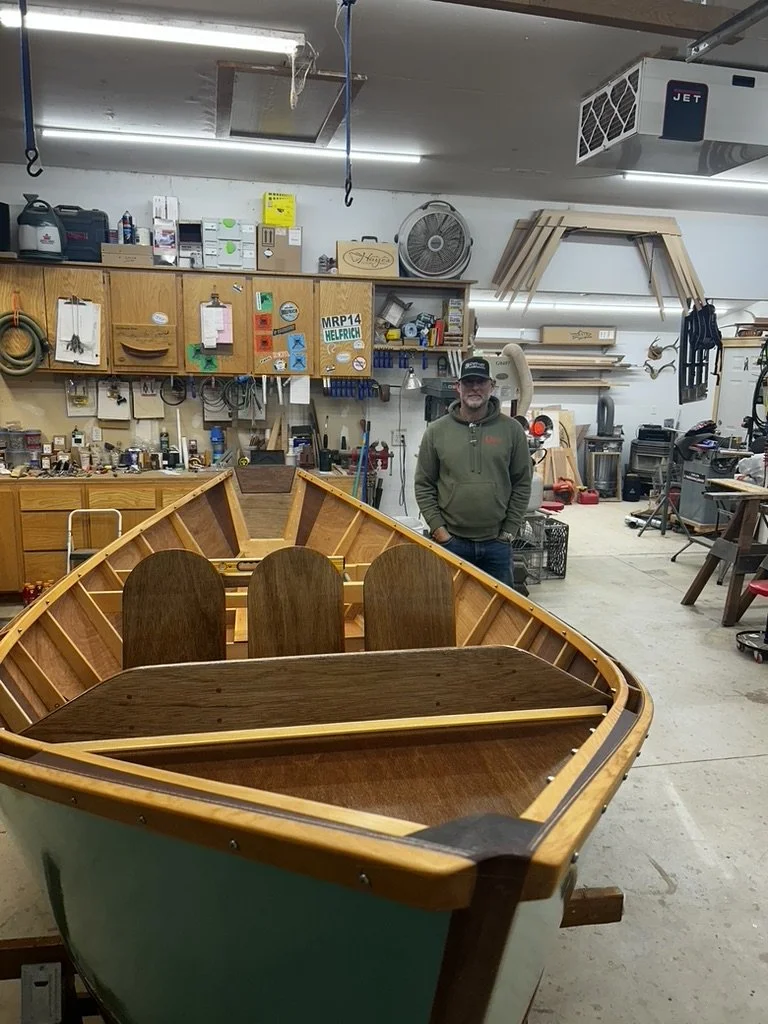
Jayson with one of his boats. Photo courtesy of Will Conable
Finally, I turned our conversation to the start. Why wood? In a drift boat scene filled with aluminum and fiberglass options—with some companies going with even more exotic synthetic materials—and in a world where fishing rafts have started to catch on, why wood? He admits there’s no single answer. Instead, it’s a host of answers. There’s a little bit of pride, a little bit of romance. There’s the joy of the building process, the craftsman’s eye for sourcing materials. Wood drift boats are floating, functional art. They’re all unique. “No two boats are the same, and the river always tells you if the build is right or not.” He loves the poetry of running a river where it’s just you, your boat, and your oars. In terms of river craft, rowing a wood boat, or building one, or rowing one you built simply makes you better. He likes that challenge. Laughing, he admits an obvious truth, “You don’t want to get a scratch on your boat, man.” From start to finish, from build to first run of the river, Jayson understands the process as a relationship. “There’s no place I’d rather be. It’s where I get my soul revived.”
Why wood, then? Because of craft. Because of skill, history, community, legacy. Because running a drift boat is always a dance on the water, “sometimes slow, sometimes not.” Because wood makes a fine dance partner. Because, at the end of the day, when the river is run, the boat is trailered, and the oars are stashed, that wood boat is still a damn beautiful thing.