
Zamberlan Salathe Trek GTX Review: A Hiking Boot That Finally Fit Me Right
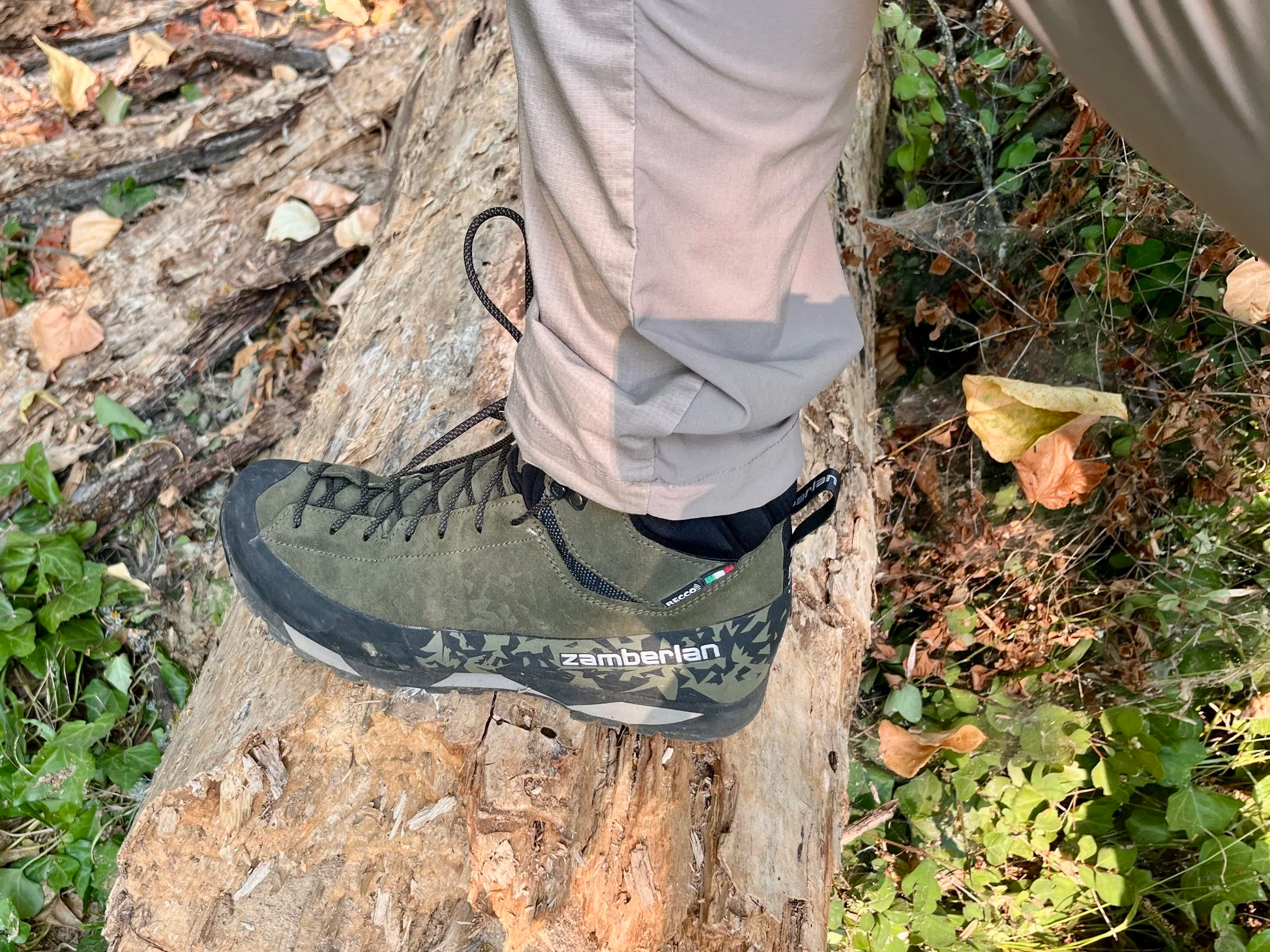
The Salathe Trek GTX hiking boot.
I’ve suffered through enough bad experiences with hiking boots that I don’t really trust them out of the box.
That’s not because I dislike boots. I like the feeling of having something sturdy under me when I’m carrying a pack over rough ground. I consider hiking boots to be an essential part of my outdoor kit for the Pacific Northwest. What I don’t like is when a boot feels promising in store and then turns into a medieval torture device six miles from the trailhead.
Boot-caused blisters and sore tendons have plagued me in the past. I’ve also had boots that technically fit but never felt like they fit me, which is almost worse because you keep trying to convince yourself they’ll get better after one more hike.
The Zamberlan Salathe Trek GTX is one of the few hiking boots I’ve worn that skipped most of that drama.
First Impressions
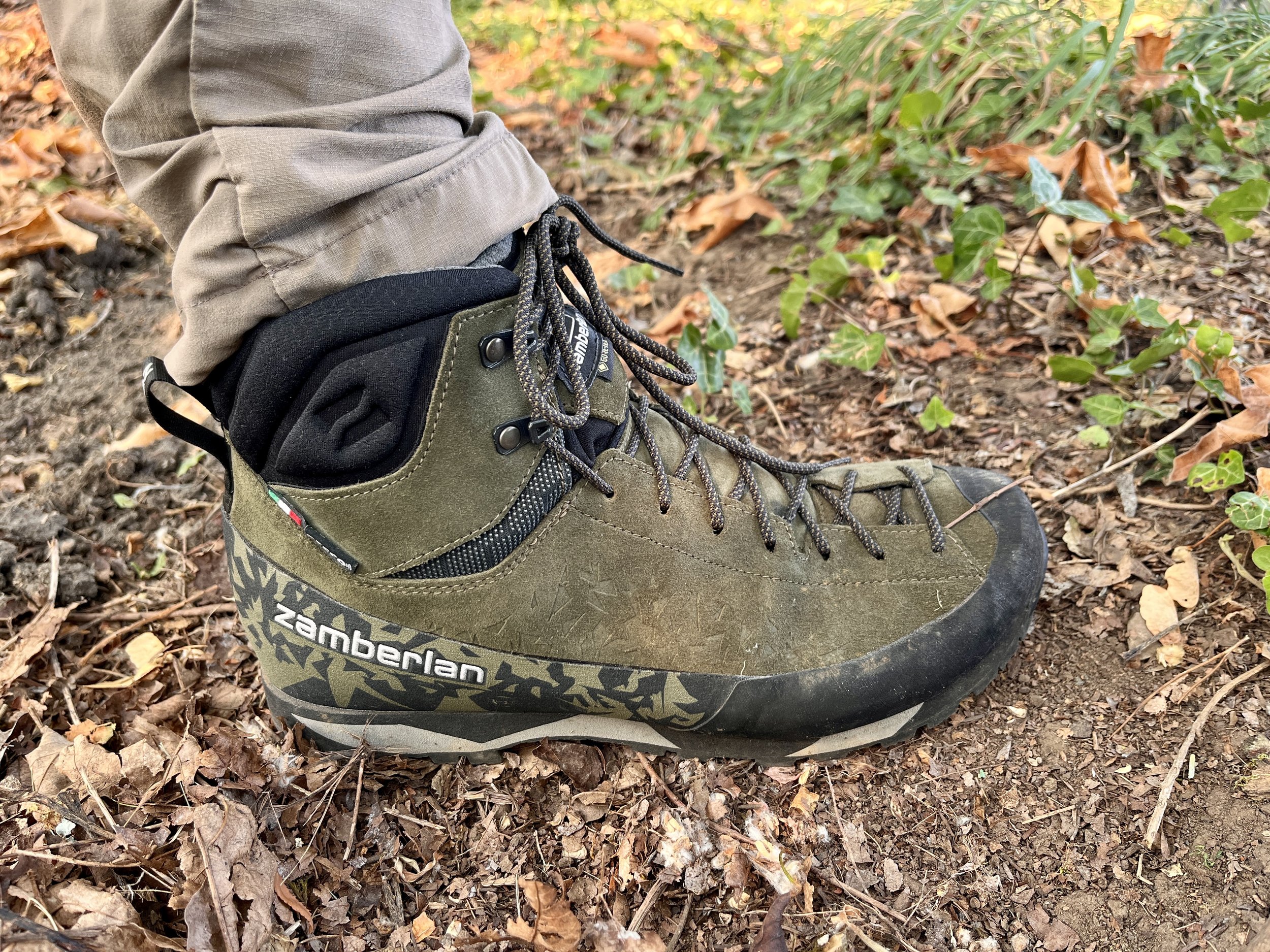
A profile view of the Salathe Trek GTX hiking boot.
These are mid-height, waterproof hiking boots with an approach-shoe personality. Zamberlan describes them as built for freedom of movement and lightweight comfort with the support of a hiking boot. That tracks with how they felt to me. They’re still boots, and they still have real protection, but they don’t have that stiff, blocky feel that makes some hiking boots seem like they need a formal break-in period and a waiver.
The most important thing about the Salathe Trek GTX is the fit. For me, it was excellent right away. The boot held my foot securely, gave me enough room where I needed it, and never created uncomfortable pressure points. The “to-the-toe” lacing system is a big part of that. Instead of only adjusting the upper part of the boot and hoping the forefoot works itself out, the Salathe Trek lets you fine-tune the fit from the ankle down to the toe box.
On a mellow ridge trail, I could keep the fit comfortable without over-tightening everything. On steeper or more technical trail, I could snug the boot down more precisely and get a better hold through the forefoot.
Field Testing
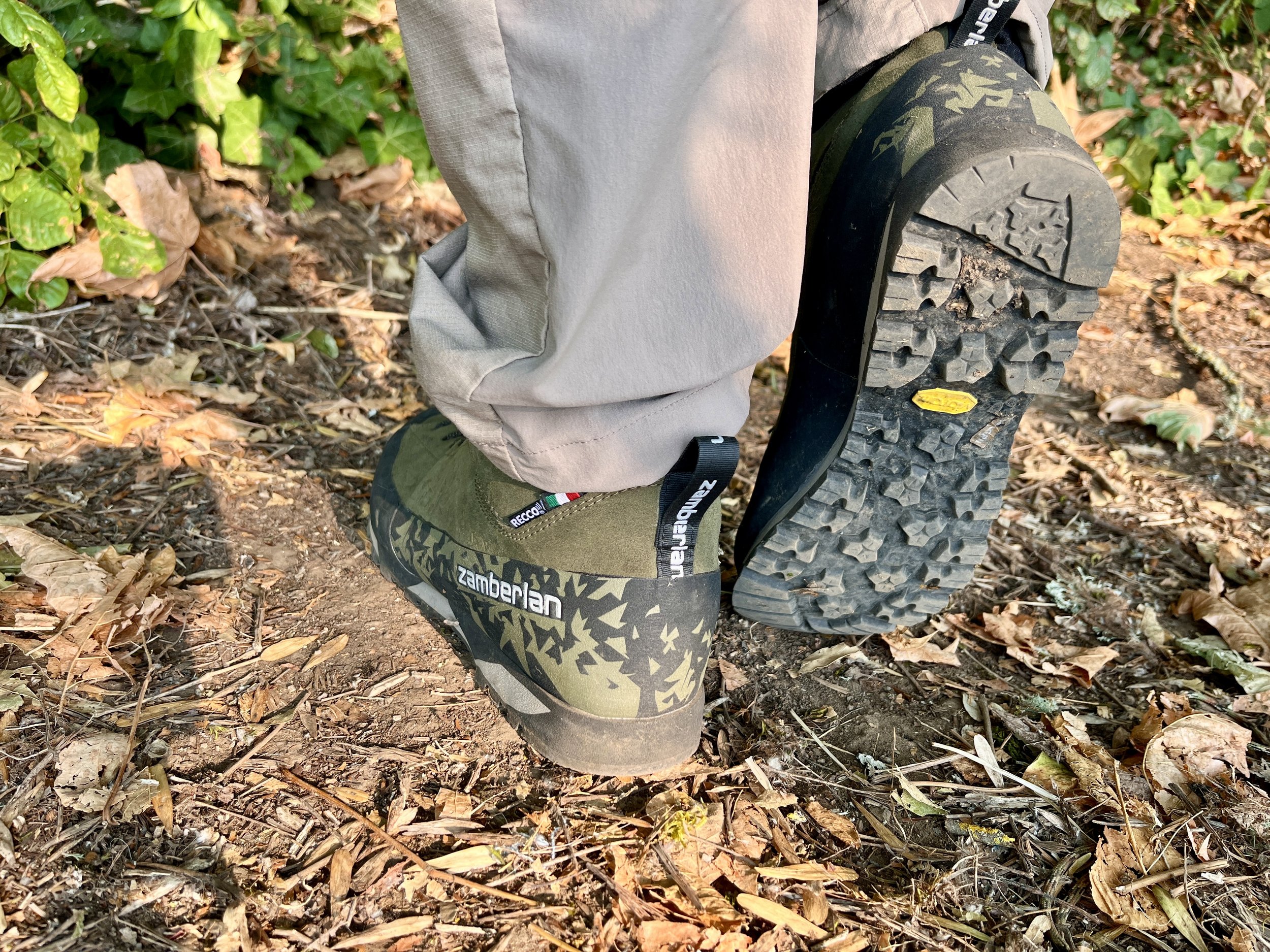
The Salathe Trek GTX hiking boot in action.
I tested the Salathe Trek GTX on multiple Eugene-area day hikes and while backpacking Oregon’s Diamond Peak Wilderness. When backpacking, I tend to move fast — even running some sections of trail. I don’t recommend others do this with a new pair of boots, but hey — it worked out just fine for me.
The boots never rubbed me the wrong way, which was the most impressive part. No heel bite, no hot spots — nothing. I was asking a lot from a new pair of boots, especially while moving quickly uphill with a full backpack, and the Salathe Trek GTX felt surprisingly natural. Not trail-runner natural, of course. They’re still mid-height waterproof boots. But compared with many boots I’ve worn, they felt easy to move in from the start.
Design Details
The construction helps explain some of that. Zamberlan uses a 1.6 to 1.8 mm Hydrobloc suede upper, a GORE-TEX ePE Extended Comfort lining, a die-cut EVA midsole, and a full rubber rand for protection around the foot. I weighed my pair of 9.5-sized boots in at 2.45 pounds, which is fairly light for its category. The flex is on the softer side for a boot, and that made a difference for me on uphill pushes and quicker movement.
The outsole is a Vibram Pepe with Megagrip compound, and the traction felt trustworthy on mixed mountain terrain. I wouldn’t call the Salathe Trek a mountaineering boot or a heavy-hauling boot, but it has enough grip and edging confidence to make sense on technical hiking trails.
Waterproofing is another useful piece of the design. The GORE-TEX lining and treated suede upper give the boot proper wet-weather protection, which is one of the reasons I still like boots for the Pacific Northwest. If you hike in Oregon long enough, you never assume any trek will be completely dry. Diamond Peak Wilderness can have dusty trails, damp meadows, creek crossings, lingering snow patches, and weather that changes its mind. A waterproof boot that still feels reasonably nimble is a nice thing to have.
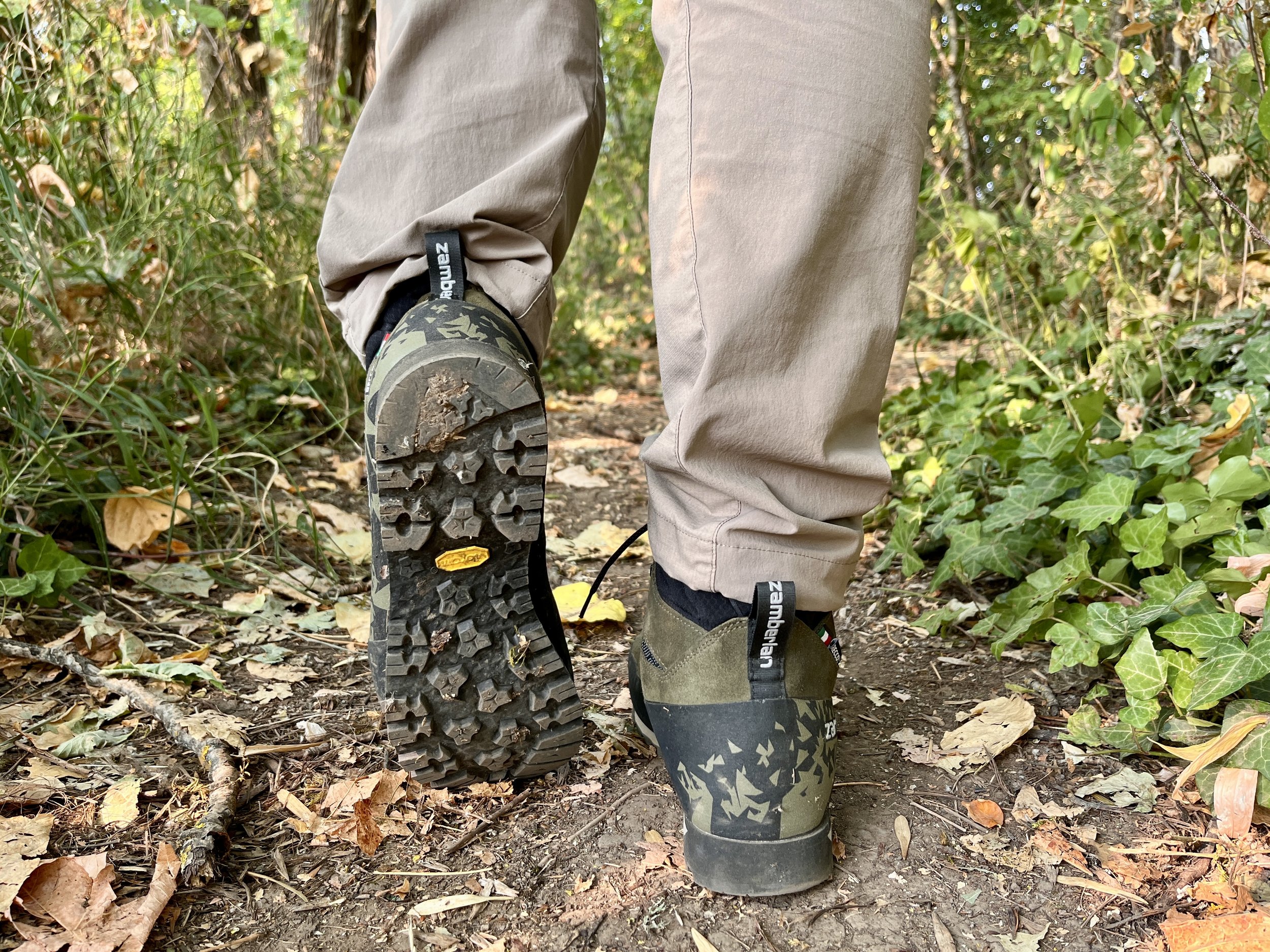
A detailed view of the lugs featured on the bottom of the sole of the Salathe Trek GTX hiking boot.
Not a Solution for Every Hiker
The Salathe Trek GTX is not the boot I’d recommend to everyone. If you mostly hike on smooth trails, carry light loads, and already love low-cut hiking shoes or trail runners, this may be more boot than you need. It also costs $350, which puts it firmly in serious-boot territory. That price is easier to understand when you consider the made-in-Italy construction and resoleable design, but it’s still not a casual purchase.
The fit is the main reason to buy it, which means the fit needs to work for your foot. Zamberlan’s X-Active Fit includes a comfortable instep, wide flex point, wide last, and wrapped ankle, and that combination worked very well for me. But boots are personal. If the shape doesn’t match your foot, none of the specs matter much. Chances are, though, that this boot is more likely to fit well than most.
Final Thoughts
All in all, the Zamberlan Salathe Trek GTX solved one of my biggest problems with hiking boots — it gave me real boot protection without punishing my feet for the first several trips. The fit felt meant for me right out of the box, the lacing system let me adjust comfort and security throughout the day, and the boot felt more agile than its build might suggest.
I’d recommend it for hikers and backpackers who want a comfortable, protective boot for rough trails, wet weather, moderate loads, and mixed terrain, but who hate the clunky feel and painful break-in period of more traditional boots. I wouldn’t buy it as a casual day-hiker if you’re perfectly happy in lightweight shoes, and I wouldn’t expect it to feel as soft or effortless as a trail runner.
But if you’ve been burned by boots before, the Salathe Trek GTX is worth a serious look.
Arthur McMahon is an avid outdoor explorer who believes that using his two feet is the best way to see the world. He's thru-hiked the 2,650-mile Pacific Crest Trail, completed numerous marathons and ultramarathons, and is often adventuring in the mountains of the PNW. He has written for established outdoor organizations such as the Pacific Crest Trail Association, Backpackers.com, Territory Supply, and OutdoorGearLab. And he's managed content for outdoor and travel brands like GoPro and Japan Airlines. Find him on Instagram at @arthur_mcmahon