
Luno AIR+FOAM PRO Vehicle Mattress Gear Review: I Thought My Car-Camping Setup Was Solid. This Made It Better.
For years, I thought I had my car-camping sleep setup pretty well dialed in.
I drive a Land Rover LR4, and when the seats are folded down, the back turns into a flat and spacious sleeping platform. It’s not glamorous, but it works. On camping trips, overlanding trips, and nights before early trail starts, I’d slide my Exped MegaMat Duo into the back, roll down my windows and slip bug screens over the doors, lay out the bedding, and call it good. Compared with sleeping on a thin backpacking pad in a tent, it felt like luxury.
And honestly, it was pretty comfortable. That’s part of what made the problems easy to ignore.
The MegaMat Duo is a great camping mattress, but it was never built for the back of my LR4. It was just slightly too wide, which meant it scrunched against the sides of the vehicle and rose up a bit along the edges. Not enough to ruin a trip — just enough to make the usable sleeping space feel smaller for me and my wife. I also had to underinflate it a little so it would fit better, which meant I was already compromising on comfort before we even crawled into bed.
Then there was the one-piece mattress problem. My wife and I do not have identical opinions about air mattress firmness. With the MegaMat, we had to pick one firmness level and both live with it. We could also feel each other toss and turn during the night.
None of this made the setup bad — we happily lived this way for a month overlanding across Utah. It just made it imperfect in a way I had mostly accepted. Camping is full of little compromises, after all.
The Luno AIR+FOAM Pro Vehicle Mattress made me realize that some of those compromises were unnecessary.
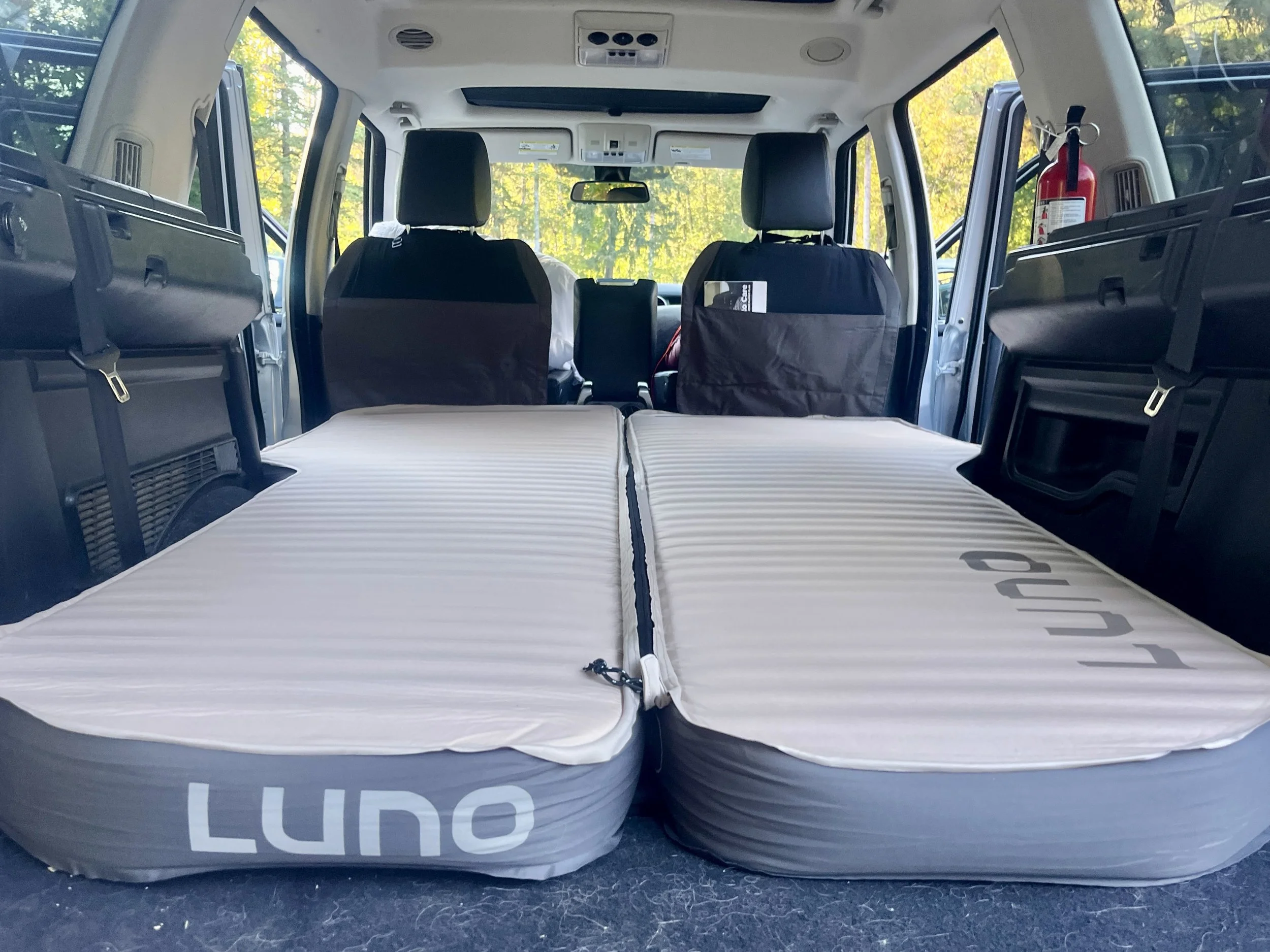
The biggest difference is obvious as soon as the mattress is in the vehicle — it actually fits.
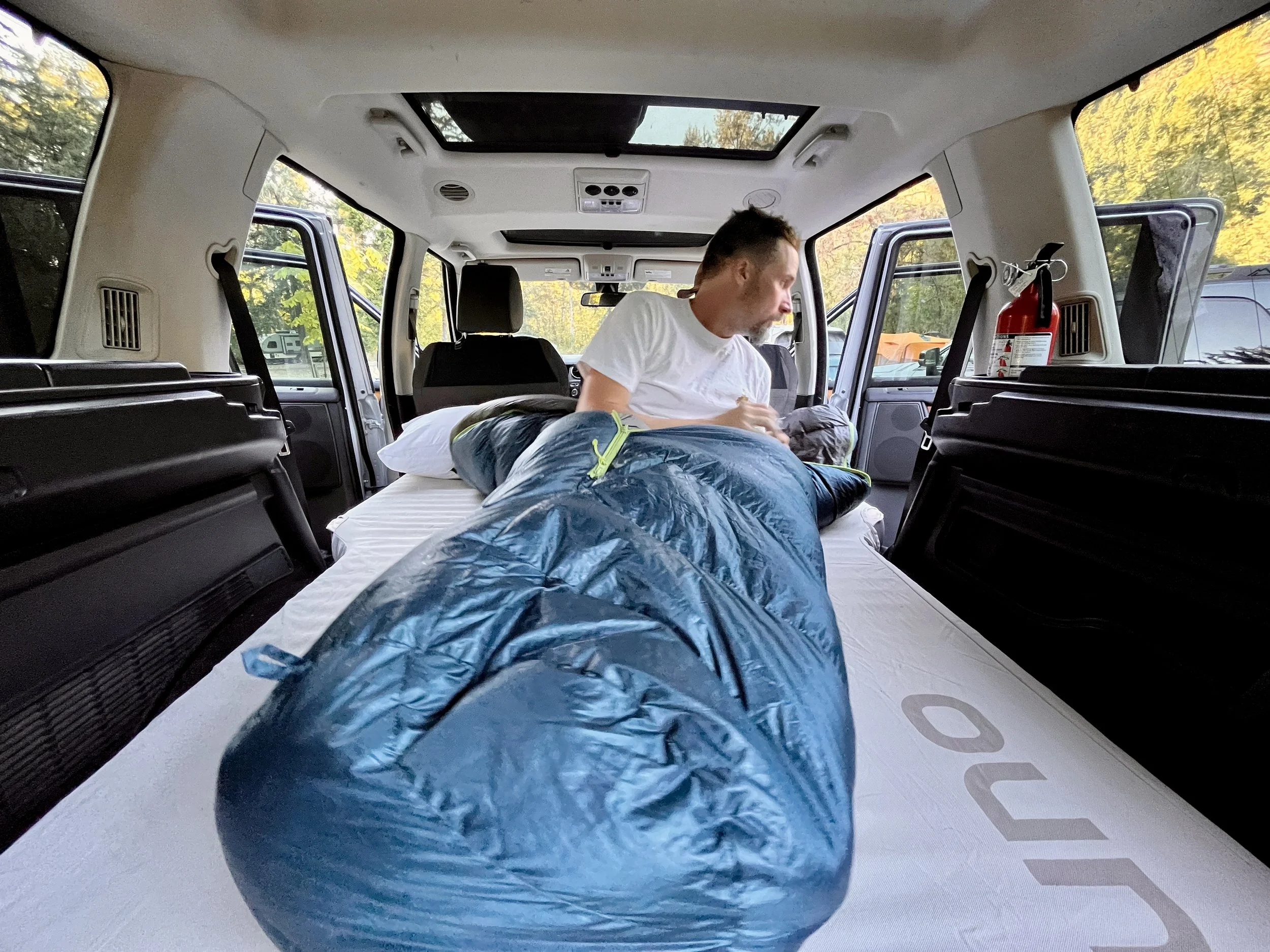
A mattress made for you car: The Luno AIR+FOAM PRO Vehicle Mattress
Luno makes the AIR+FOAM Pro to fit specific vehicle models, and in my LR4, that changed the whole setup. Instead of forcing a rectangular camping mattress into a space that wasn’t quite shaped for it, the Luno fit the back of the vehicle cleanly. No scrunched-up sides or rising edges, and no underinflating just to make the mattress behave.
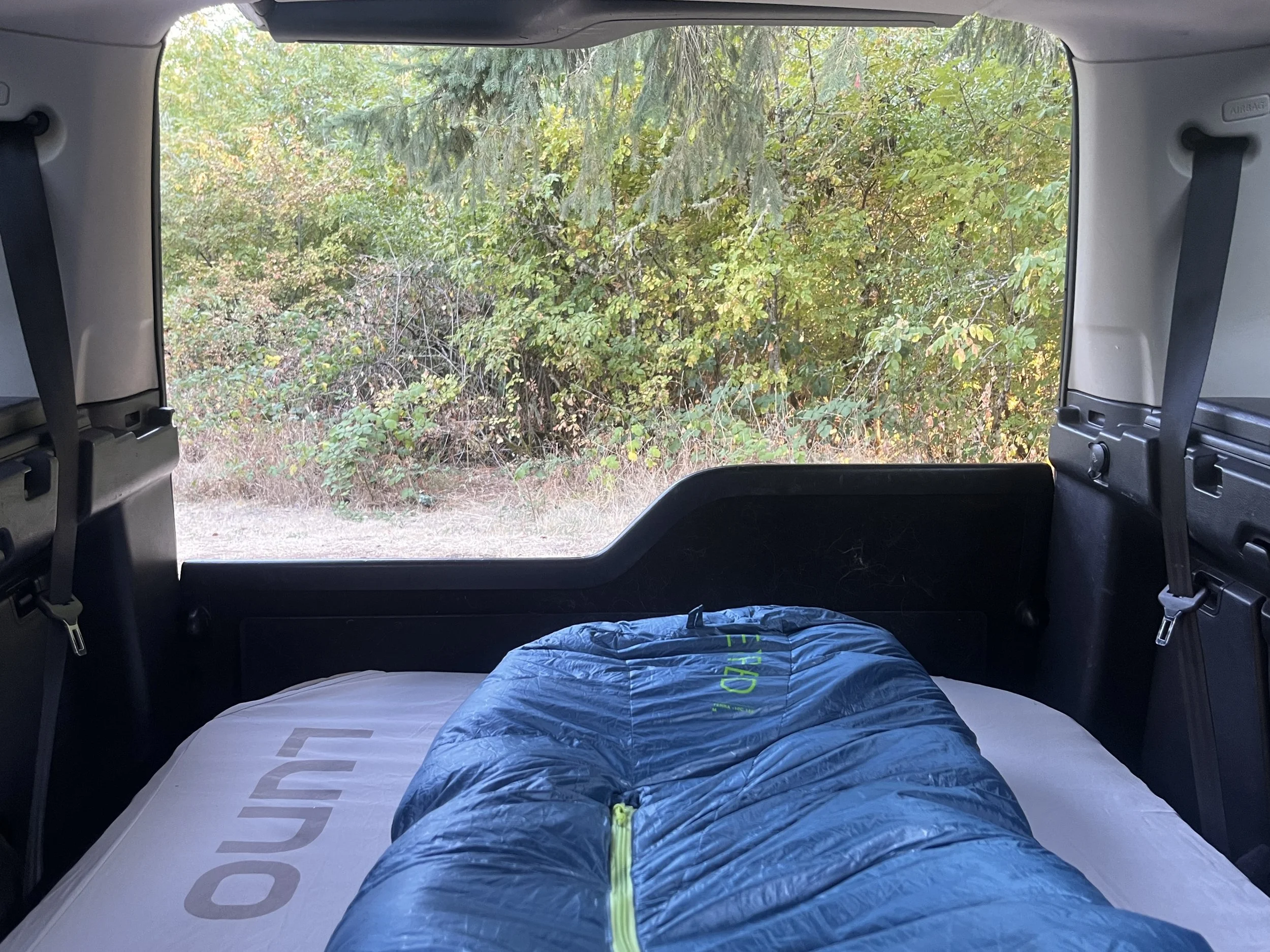
That may not sound like the most dramatic upgrade, but when you spend enough nights sleeping in a vehicle, small improvements start to matter. A flatter sleeping surface means more usable room. More usable room means fewer elbow and knee mishaps, and fewer negotiations over whose side ends where. It made the back of the LR4 feel less like an improvised solution and more like a proper sleeping space.
The AIR+FOAM Pro is also very comfortable. More comfortable than my old setup, which is not something I expected to say lightly. It has a 4-inch inflated height and combines air with foam, giving it more of a real-mattress feel than a basic air pad. Luno lists the mattress with an R-value of 11, so it’s also built with cold-weather insulation in mind, which matters if your version of car camping includes shoulder-season treks, damp forests, chilly desert nights, or alpine sunrises.
Inflation is straightforward. The mattress self-inflates partway, and then you use the included AirRoll Bag to finish the job and fine-tune the firmness. That last part is where the design really shines for two people. The AIR+FOAM Pro is made from two separate mattresses zipped together, and each side inflates independently. My wife and I can now each set our own firmness instead of negotiating one shared level that is acceptable to both of us but perfect for neither.
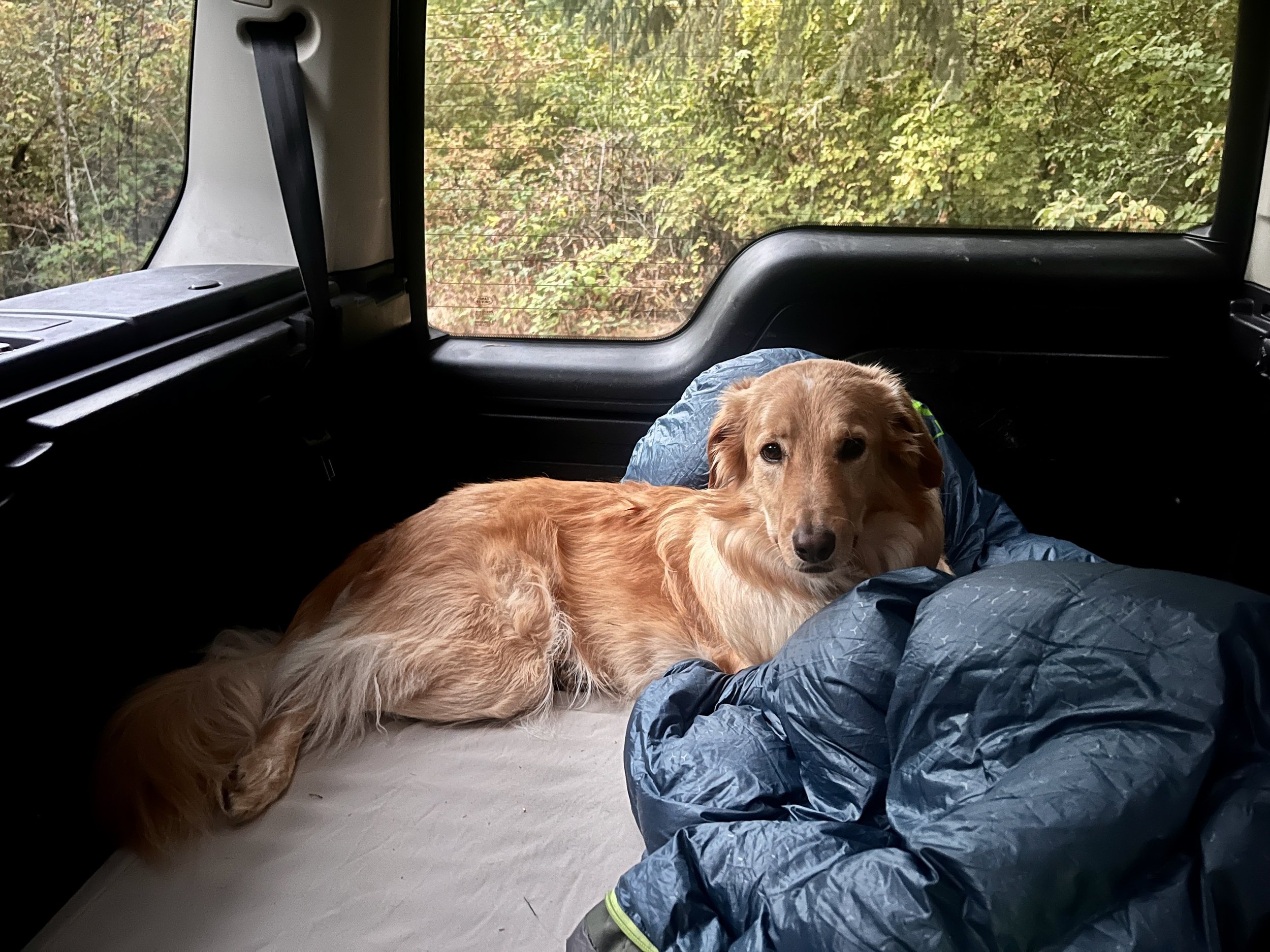
A very content Toby on the Luno AIR+FOAM PRO Vehicle Mattress
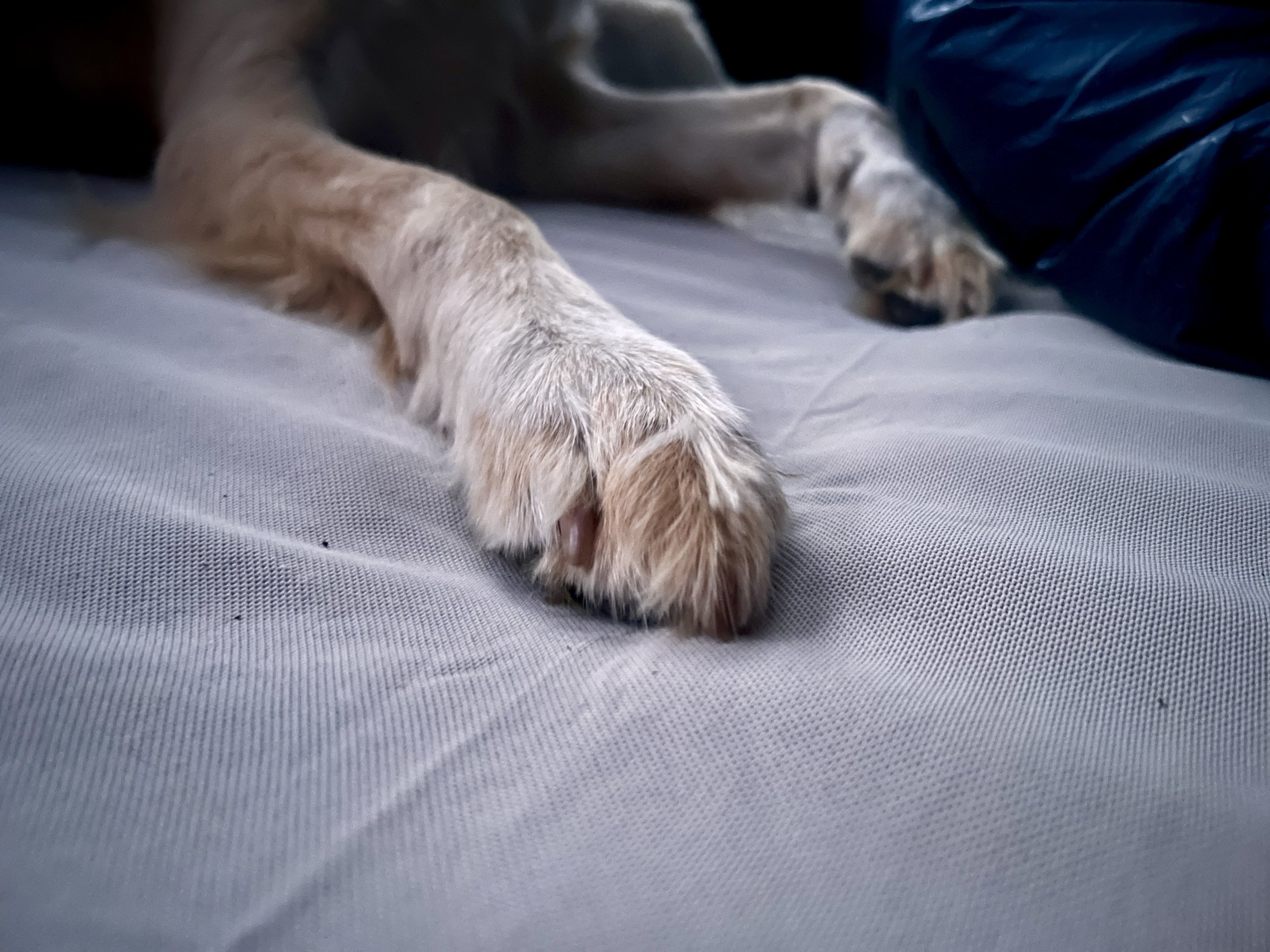
It also cuts down dramatically on movement transfer. I noticed this not just with my wife, but with Toby, my dog, who is not exactly a silent sleeper. He moves around often, turns in circles, resettles — he’s a bit of a neurotic mess, to be honest, but he’s my mess. On the Luno, I barely felt him moving through the mattress. That alone made the setup feel calmer.
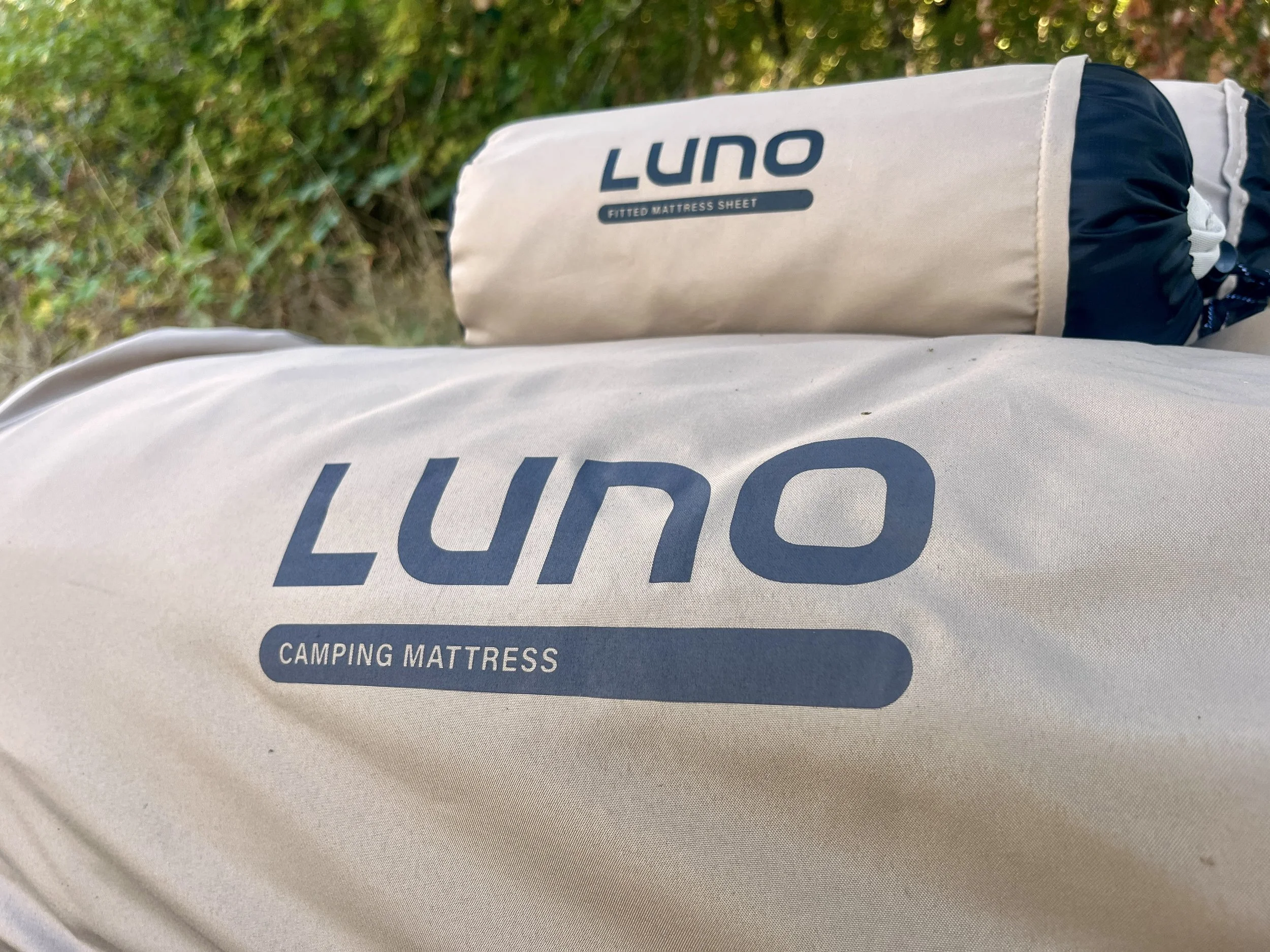
The fitted sheet helps a lot if you camp with a dog. I tested Luno’s sheet with the mattress, and it turned out to be one of those accessories that makes more sense once you actually use it. Dogs bring the outside inside. Dirt, sand, pine needles, mystery debris — with the fitted sheet, most of that mess could be brushed away in the morning and washed properly once we got home.
The AIR+FOAM Pro can also be used solo. Because the mattress is really two sides zipped together, you can remove one half when you’re camping alone. That leaves more storage room for bins, bags, coolers, dog gear, camera gear, or whatever else is slowly taking over the inside of your vehicle. For couples, it works as a full sleeping platform. For solo trips, it can become a more efficient one-person setup.
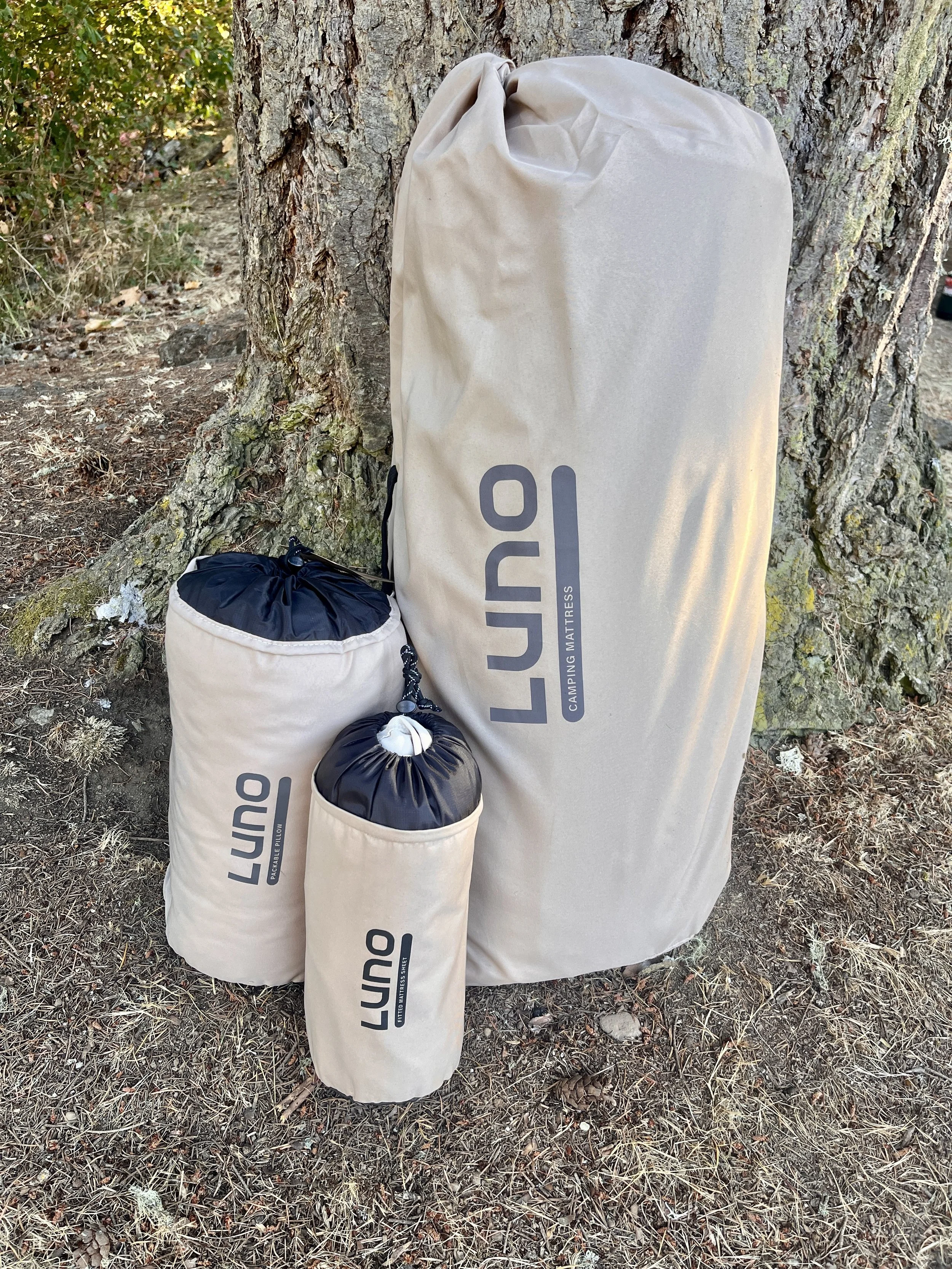
The main downside is price. At $499.99, the AIR+FOAM Pro is not a cheap way to sleep in your car, and once you add the fitted sheet, the total setup becomes more of an investment. It also weighs 12 pounds and packs to 29 by 11 by 18 inches, so this is not a tiny piece of gear you’ll forget is in the vehicle. It takes up space because comfort takes up space. That’s the tradeoff.
For me, the tradeoff makes sense because sleeping in my vehicle is not a once-a-year novelty. It’s part of how I travel outside. It lets me start closer to trailheads, camp more comfortably in rough weather, bring the dog, and turn the back of the LR4 into a reliable basecamp when I don’t feel like setting up a tent.
The Luno AIR+FOAM Pro did not reinvent car camping for me, but it did fix several little problems I had been tolerating for years. The fit is better. The sleeping surface is flatter and more comfortable. My wife and I can choose our own firmness. Toby can move around without shaking the whole bed. Dirt and dog debris are easier to manage with the fitted sheet.
That’s the kind of upgrade that sounds boring until you spend a night with it. Then your old setup starts to feel a lot less dialed in than you thought.
Arthur McMahon is an avid outdoor explorer who believes that using his two feet is the best way to see the world. He's thru-hiked the 2,650-mile Pacific Crest Trail, completed numerous marathons and ultramarathons, and is often adventuring in the mountains of the PNW. He has written for established outdoor organizations such as the Pacific Crest Trail Association, Backpackers.com, Territory Supply, and OutdoorGearLab. And he's managed content for outdoor and travel brands like GoPro and Japan Airlines. Find him on Instagram at @arthur_mcmahon