
From Resort to Backcountry
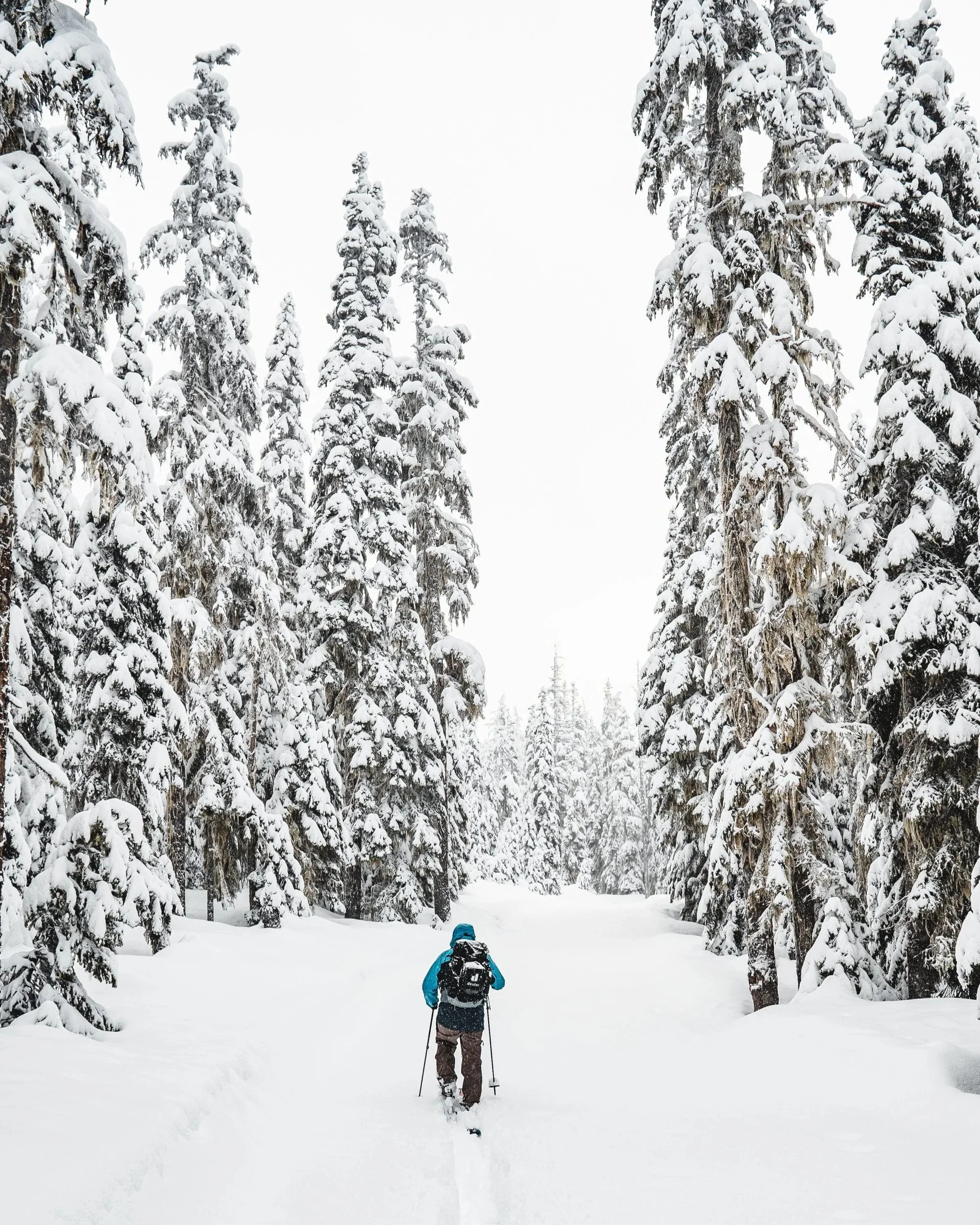
We sat in our spare bedroom the night before, like kids prepping for the biggest day on the mountain, systematically sticking skins to the bases of our skis with focus, then pulling them off as seen in Instagram Reels to practice putting them in our pack, while also going through the motions of understanding how our bindings work when transitioning from tour to alpine.The next morning we headed up the Santiam Pass and parked at the base of Potato Hill, off Highway 20. We clipped the toes of our boots into the pins of our bindings—click, click—and slowly began our ascent. Aaron clipped into his bindings immediately, while I became quickly frustrated and required the help of our experienced friend to secure my boots into the bindings.
And that was it. No chairlift hum, no sound of excitement from skiers around us, no groomed corduroy, no crowds. The skins whistled against the snow with every glide upwards, making a steady, rhythmic sound. Our breath puffed out in small clouds, and our legs burned in a very unfamiliar way. Somewhere above us, the summit waited underneath the warm winter sun. And this was where it began: my clumsy, exhilarating introduction to the backcountry, while Aaron seemed to be more at ease and confident, exhibiting more stamina and strength.
We’ve been skiers for a long time, with Aaron being a far more advanced skier than myself. We are comfortable inbounds, familiar with ski resort lines, and quite familiar with the chairlifts and marked runs. Aaron is also skilled at making turns and carving new lines out of bounds and skiing through the trees. Skiing has always felt like a point of excitement each season, almost like a kid at Christmas. But stepping into the backcountry for the first time reminded us that familiarity doesn’t equal understanding—and that the mountains still have a lot to teach us.
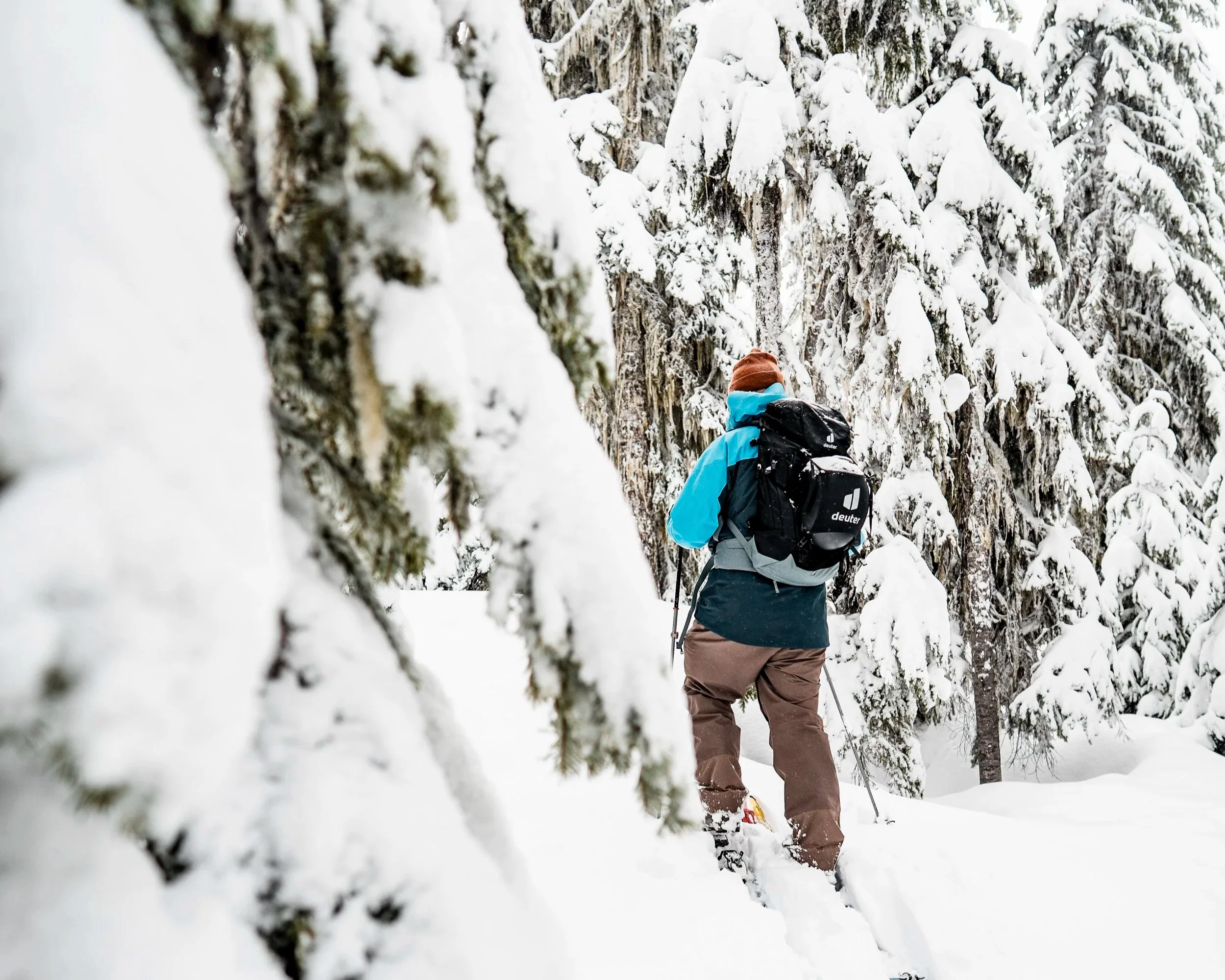
Ski touring didn’t feel like an extension of resort skiing. It felt like I was starting over. The pace slowed immediately. There was no lift to erase the effort, no patrol to mark the way, no rush to squeeze in one more run, and definitely no peace of mind if I had an accident. Every step uphill required intention. Every decision carried weight. It was humbling in the best way, but brought a wave of nervousness when traversing down for the first time. Reaching the top granted intoxicating views and perspectives not yet seen before that filled me with satisfaction.
Starting ski touring later in life has shaped how we approach it. We’re not chasing big lines, high elevations, or fast progression. We’re learning deliberately—asking those around us with experience questions, studying weather, and accepting that strong downhill skills don’t replace mountain awareness. Experience on skis helps, but it doesn’t immediately give us expertise in terrain that demands respect and essential safety precautions.
What’s surprised us most is how much the uphill has changed our relationship with skiing. Moving slowly through winter landscapes, hearing nothing but our breath and skins on snow, noticing subtle shifts in terrain and conditions—it’s made us more present. Turning around when something doesn’t feel right has become a success, not a failure.
Getting the gear necessary for our first trip came with time, intention, and most certainly didn’t come to us overnight. While Aaron was more pragmatic in his research, I relied heavily on social media-inspired excitement to learn and research. Aaron has years of experience skiing off-piste, while I have always been the less experienced, tentative one, almost always skiing what I was familiar and comfortable with. Buying gear could come at a price if we disliked the backcountry. Our goal, in simplicity, was to get gear to get us out there.
Our purchases included a set of skins that were on sale, providing us confidence and ease for our first climb, followed by bindings that would allow us to resort ski, as we knew we would still be spending more time resort skiing, especially if we found that the backcountry wasn’t for us. Our goal was never to purchase the “best” or “most expensive” gear, or even the lightest gear. We just wanted to be able to have the experience out of the resort, not for big-mountain ski touring.
There are key safety concerns that require consideration in backcountry skiing, such as avalanche safety education and weather data observation. AIARE avalanche courses, along with the gear necessary to keep you safe, such as a shovel, beacon and probe, are recommended. We do not profess to be experts, and we still have a lot to learn. As for now, almost all of our “out of resort” experiences have been limited to sidecountry touring. And in all honesty, I’m content with that for now.
As people who spend a lot of time outdoors doing multiple types of activities in the summer, finding more diversity for our winter months was what we were hoping to achieve. The sound the snow makes under your skis, combined with the peace of being immersed in a wintry forest scene, is therapeutic. Being outdoors strips away the noise of everyday life and its daily struggles. It has never been about becoming the best skier for me. While skill has its own advantages, I want to be outdoors to silence the noise and for the adventure.
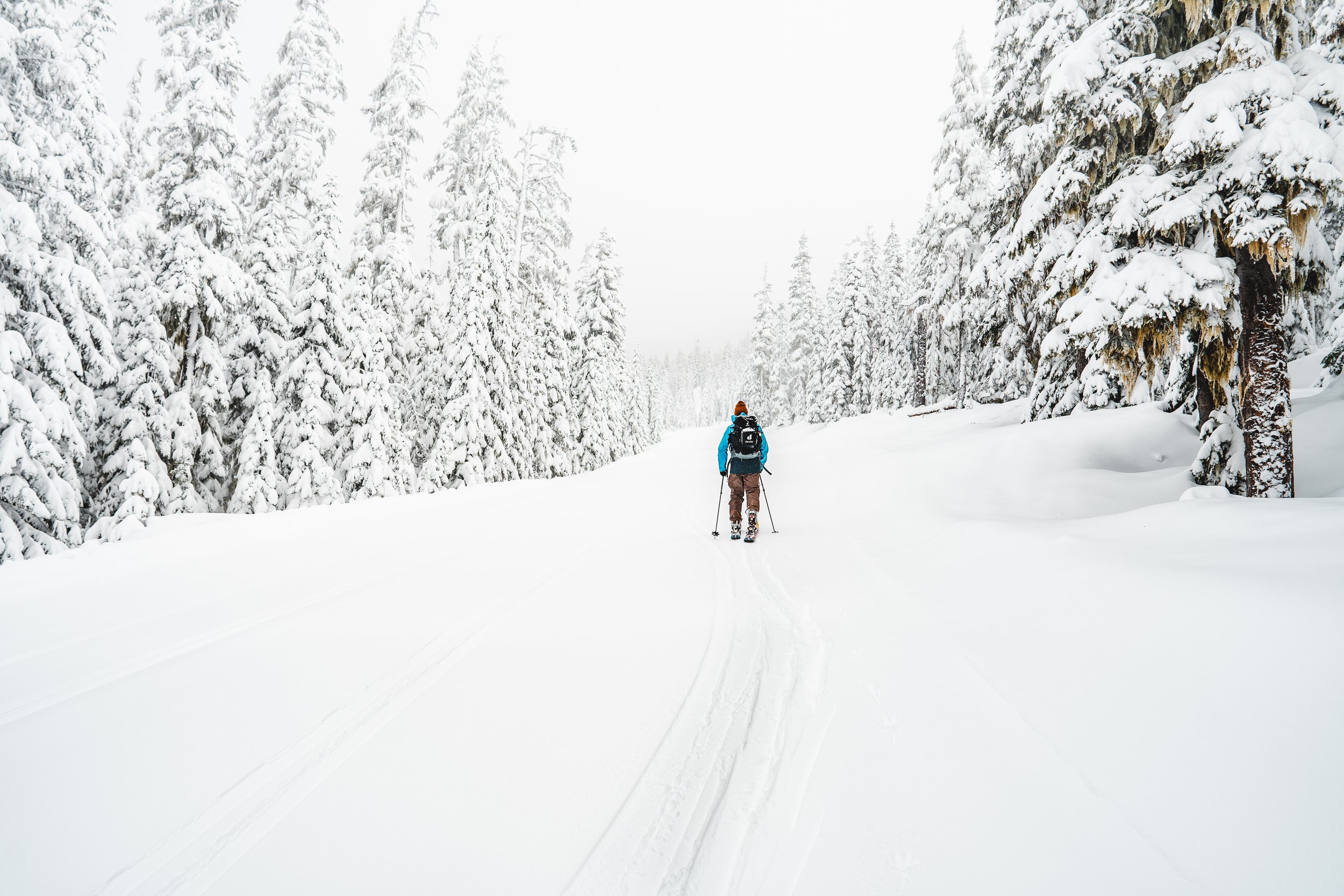
We’re beginners again, and we’re okay with that. Ski touring isn’t about proving anything. It’s about breaking trail, earning turns, moving thoughtfully, and learning to listen—to the snow, the weather, and our own instincts. The backcountry has reminded us that growth doesn’t always come from going harder. It isn’t about having the best or lightest gear. Sometimes it comes from going slower, uphill, and starting fresh.
The weather will dictate when we choose to go out. It is quite possible that for the immediate future, our time ski touring will consist mostly of sidecountry. The amazing part of that, is you throw your pack onto your back, slap your skins on, and head up and you can join friends at the top of a ski run, and enjoy both resort skiing and touring. I’m not chasing to navigate steep, narrow lines, up couloirs or mountain ridges.
For us, it’s not about finding the best line. It’s about getting outdoors, remaining active, and enjoying as much as we can. I want to continue to approach life with new knowledge of the land around us, embark on new adventures, and to never close the door on the next unfamiliar adventure. And from the soft light of winter morning and the shifting snow beneath our skis, to the delicate landscape views that appear with each glide we make upwards, ski touring helps us do just that.
Sarah Tuttle is a freelance adventure photographer & outdoor storyteller. Find her online via Instagram: @sarah_exploring