
From Field to Policy: Hunting’s Influence on Conservation
The concepts of hunting and conservation may initially seem antithetical. How could shooting animals and removing them from the landscape be conflated with conservation? Isn’t hunting detrimental to the environment? The popularity of hunting in the United States is certainly on the decline, with the number of hunters stagnating in the last several decades despite a huge increase in overall population. There are those who believe we no longer “need” hunting, opting instead for highly processed Frankenfoods or to ignore the ethics of eating meat completely by continuing to support factory farming. There are others who believe all hunting, fishing, and animal husbandry should be illegal, like the proponents of IP 28 in Oregon, an initiative that would consider all the aforementioned felony animal abuse, which has garnered 88,000 signatures at time of writing. Although hunting and conservation may seem at odds with one another, hunting and the conservation movement are intrinsically tied to each other, and this connection is often summarized by a simple phrase: hunting is conservation. The phrase is not a snappy slogan meant to mislead or deflect; it is a description of a system in which scientific management of numerous species and public funding are structurally intertwined with conservation efforts nationwide.
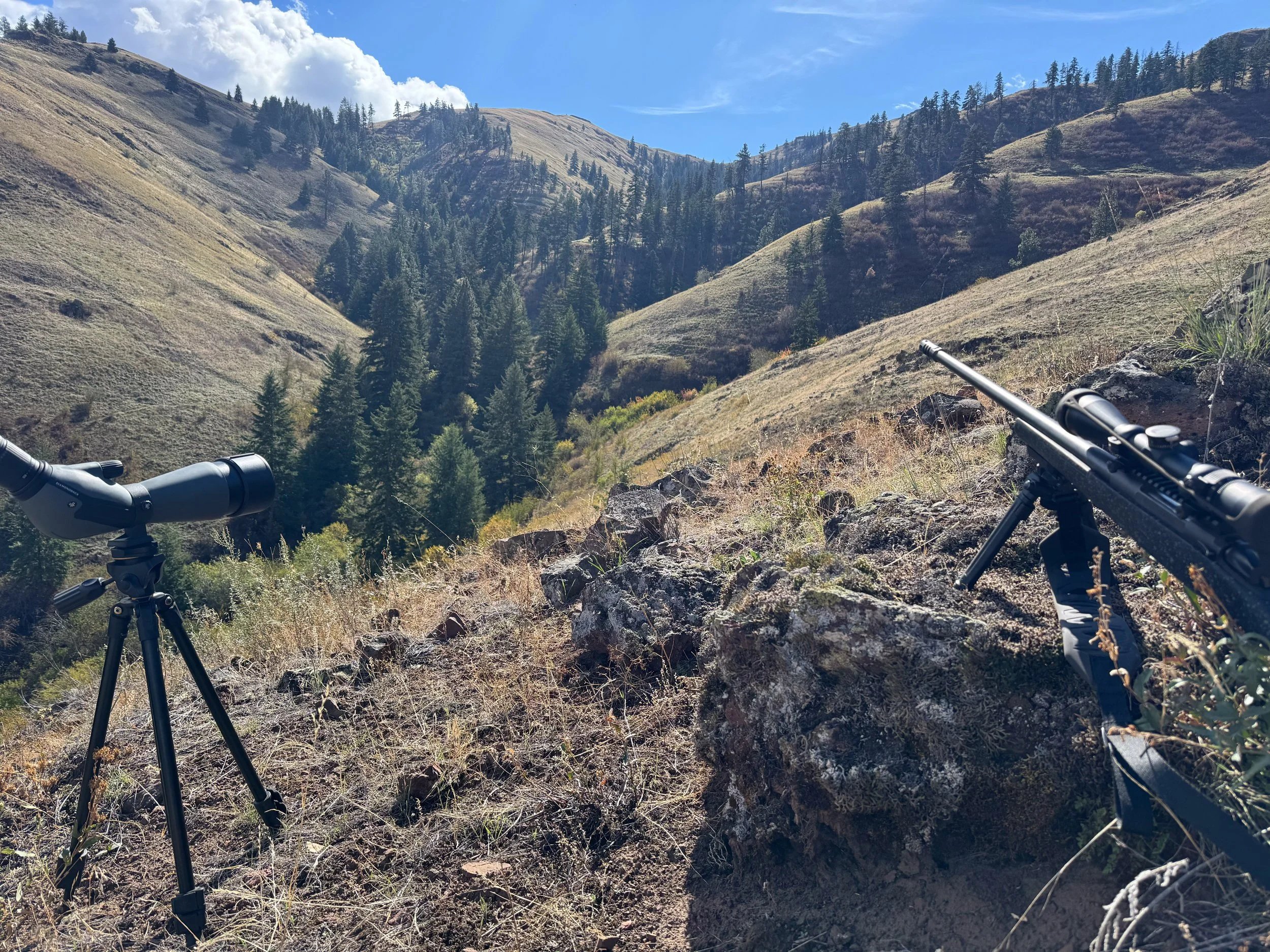
Waiting. Glassing.
Roots
In order to understand the phrase, one first has to understand the North American Model of Conservation, or the NAMC, and the funding mechanisms for such. Conservation as a concept emerged in the late 19th century, arising from the almost complete extirpation of many touchstone American species.
A crisis caused by rapid colonial expansion, unregulated market hunting, and habitat loss that pushed many species to the brink of extinction, some temporarily and some permanently. Early conservationists like Teddy Roosevelt, John Muir, and Wallace Stenger, witnessed this first-hand and sought to stop and reverse this decline, and their ideas eventually became the NAMC. The NAMC is an ideology guided by several main tenants. It holds that wildlife is a public resource and that management of this resource should be guided by best scientific practices and biological data. The model also outlawed market hunting, or the sale of meat, and states that animals can only be killed for food, fur, self-defense, or property defense. This, along with the creation of the public land system, helped lay the foundation for modern hunting in the American West.
The concept of conservation continued to grow in the early 20th century with thinkers like Aldo Leopold and was further cemented with the birth of ecology as a scientific field. Wildlife management developed and matured as a concept alongside the aforementioned. Leopold helped further shift the national narrative towards conservation with his concepts of “land ethic” and “ecological restoration.” He wrote the first book ever written on wildlife management in 1933 and became a professor at University of Wisconsin, where he continued to shape the discourse regarding wildlife and the blossoming North American Model of Conservation. Although published posthumously, his A Sand County Almanac detailed this land ethic, or the concept that working the land could be beneficial for both humans and ecology and went on to sell over 2 million copies.
Legislation
Many important laws were passed alongside these ideological shifts about how Americans use and view wildlife. Conservation groups like the Boone and Crockett Club, the Sierra Club, and others were at the forefront of helping pass legislation made to fund conservation projects. There was the Migratory Bird Treaty Act of 1918, the Migratory Bird Hunting and Conservation Stamp Act of 1934, the Federal Aid in Wildlife Restoration Act of 1937, and the Federal Aid in Sport Fish Restoration Act of 1950, also known as the Dingell-Johnson Act. Part of the Federal Aid in Wildlife Restoration Act of 1937 was the Pittman-Robertson Act, an act requested by hunters nationwide for a tax from the sale of firearms and ammunition to be given to state fish and wildlife agencies. The Wilderness Act of 1964 sought to designate various areas as wilderness areas which are not to be developed and remain for use by the people and wildlife alike, and these areas remain a favorite for hunters, fishers, hikers, and other outdoor recreators for their untouched wonders.
This legislation and the money raised by such was the guiding force behind the North American Model of Conservation and were responsible for various success stories in increasing animal populations in the United States. Wild turkey populations went from around 30,000 animals nationwide at the turn of the 20th century to 7 million animals today. Whitetail deer went from around 300,000 animals at the turn of the century to over 30 million today. Elk went from less than 100,000 animals to several million today. Bison went from 300 animals to half a million animals today.
In the present, the funding mechanisms for conservation related projects remain relatively unchanged, with each state having a variance in where all their funding comes from for conservation and wildlife management purposes. In Oregon for instance, around 30% of wildlife conservation funding comes directly from hunting and fishing licenses, another 10% comes from Pittman Robertson and Dingell-Johnson taxes, and the remainder comes from a mix of federal funding and taxes on the general public. In Montana, over 70% of funding for state wildlife projects comes from licenses, and another 15% comes from Pittman Robertson and Dingell-Johnson taxes. No matter how you slice it, dollar for dollar, hunters and fishers are paying for the majority of the conservation efforts in their given state in the American West.
Limitations
There are certainly limitations and shortfalls to this model and the funding mechanisms for such. Some argue that the model puts more emphasis on the success of game species than non-game species rather than entire ecosystems. There are others who argue the hunting and fishing communities have too big of a seat at the table for these decisions, but whenever a tax is suggested on camping equipment or a license for camping, hiking, and birding is suggested beyond a parking fee, those ideas are often met with intense scrutiny. One such tax is currently being floated in Oregon and would be an additional 1.25% tax on lodging to fund critical fish, wildlife, and habitat programs.
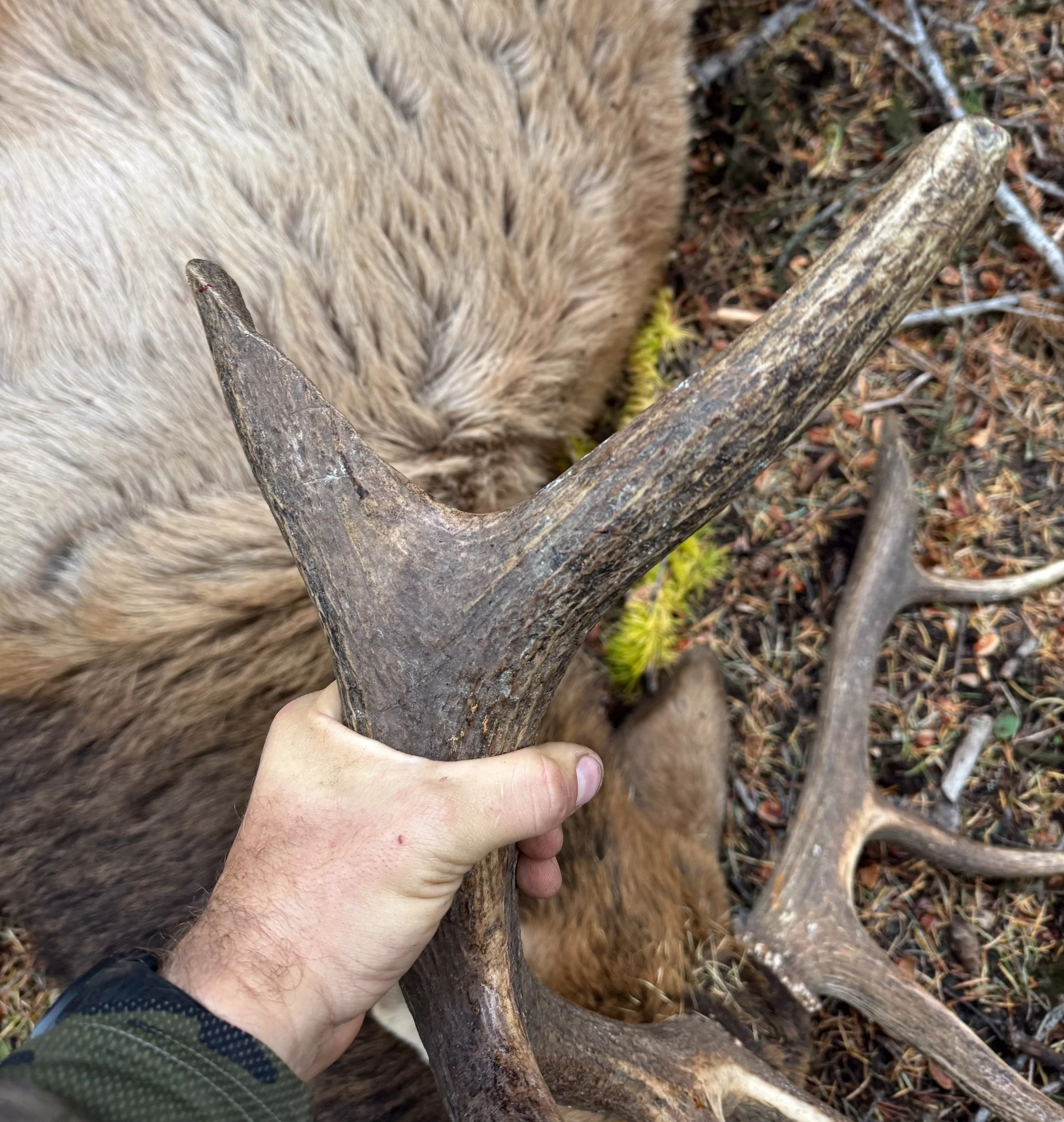
Success
Now that many states have restored healthy populations of quite a few animal species, there is some debate over what to do next. Some believe we should continue restoring all native animal populations to get them as close as possible to what they were to pre-European contact, while others say we should try to restore animal populations even further back than that. There is much debate over whether predators such as wolves and grizzly bears should be reintroduced into more areas of the American West, with hunters and ranchers often being at odds with environmental groups on the topic. Some hunters and ranchers say some environmental groups use these charismatic megafauna along with the Endangered Species Act to help fuel an anti-hunting agenda and that their motivations are often fueled by money rather than actual concern about the animals’ wellbeing. Others still believe we should just leave wildlife alone, ignoring the fact that wildlife populations do not balance out as some would suggest, the 330 million humans on the American landscape having changed and altered migration patterns, animal behaviors, and populations permanently.
Regardless of if you agree or disagree with hunting morally, the impact hunting has had on the conservation landscape and wildlife populations in the United States in the last 150 years is clear. So, the next time you see an elk at the Dean Creek Elk Viewing Area or see some wild turkeys and blacktail deer in the foothills of Eugene, rather than disparage the hunter who wishes to pursue them, tip your hat to them instead. It is likely that an American West without these animals would have been reality without the legacy of the American hunter conservationist.
Benjamin Burgholzer is an enthusiast of wild foods and wild places, a small business owner, and freelance writer. When he is not working or writing, he spends as much time as possible in the mountains of Oregon. Find him on Substack, or on Instagram.