
Stalhman Point Storm Recovery
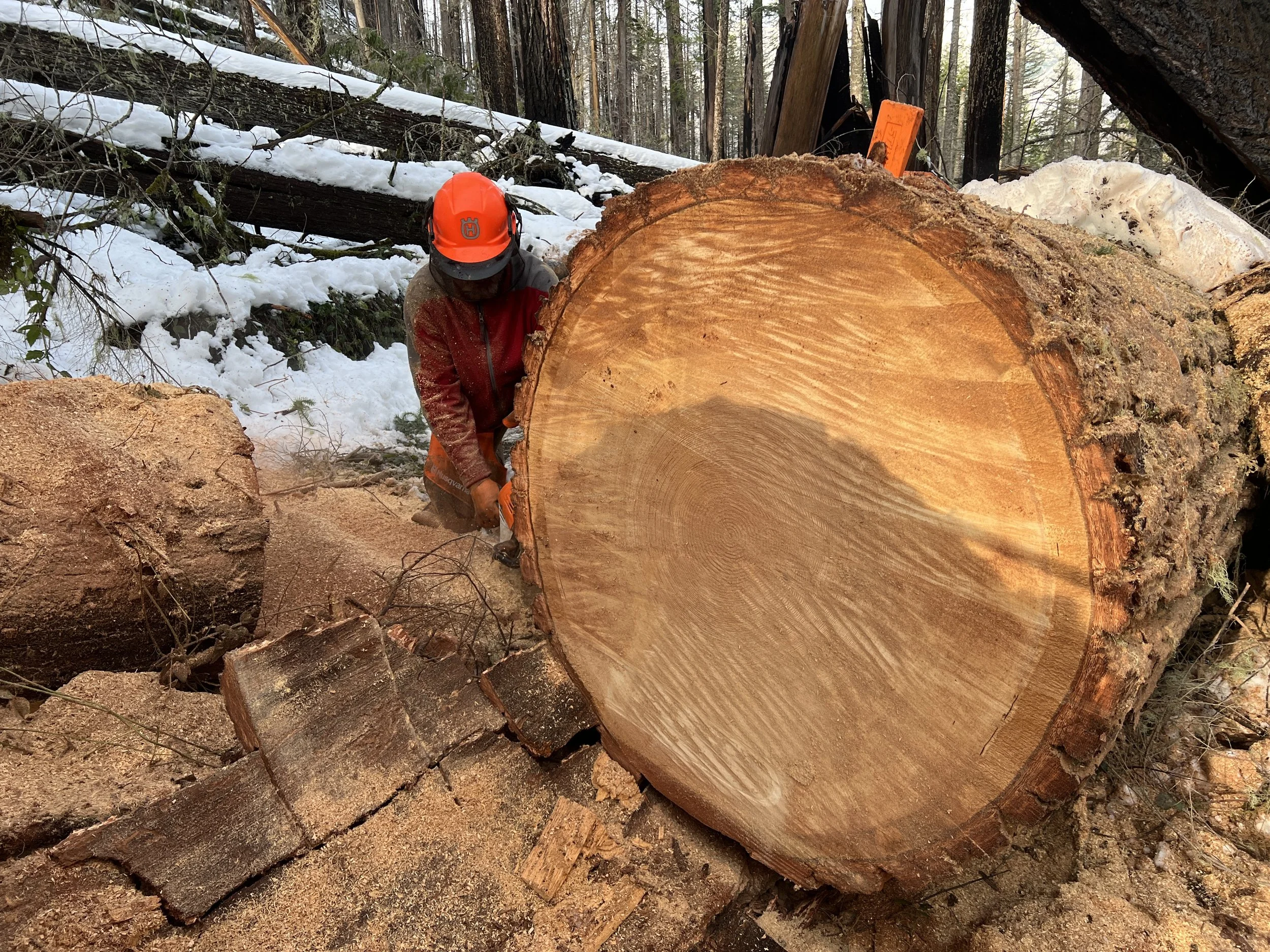
Sometimes disaster and opportunity can be two sides of the same coin. On the night of December 16, 2025, a sudden windstorm swept across the Oregon Cascades, leaving highways closed and houses crushed by wind-thrown trees. Within days, volunteers fanned out to evaluate the damage to trails in the aftermath of the storm. The findings seemed grim: Stahlman Point Trail, rising 2.2 miles from the edge of Detroit Lake to a dramatic lookout site, had over 100 new trees down and so many branches piled up that the trail was difficult to find. Many of the downed trees were huge old growth, up to 55 inches in diameter and stacked one on top of another with root balls tipped up.
In early January, I pulled into the trailhead and gingerly stepped out onto a sheet of frozen snow. I pulled micro-spikes over my boots for traction and loaded up a pack with winter gear. As the leader of the Salamander Trail Crew and Saw Program Coordinator for the non-profit group Cascade Volunteers, I had more in mind than a casual hike. The plan was to do a detailed survey of the damage and come up with a plan to restore Stahlman Point Trail to its former condition as promptly as possible.
Starting up the trail, I could see that intrepid members of the public were already ahead of me. They were climbing over and around huge piles of debris, already creating user trails into the surrounding forest. Just a month before, the trail had been fully cleared and in plush condition for the many hikers who enjoy the challenging climb and wide vista from the old lookout site above Detroit Lake. From seven years of working this trail multiple times a season, I could readily spot the improvements our volunteer crew had made over the years working hand-in-hand with the Detroit District Forest Service trail crew: reconstructing tread that had slid down the steep hillside or become narrow and treacherous; creating rock drainage features to keep water off the trail (and users on it), and of course doing the routine work of cutting back brush and removing downed trees.
In the first mile of trail, I made my way over and around 50 new downed trees. By the time I reached the saddle just a half mile from the summit the combination of deepening snow and massive amounts of huge deadfall had swallowed the trail completely. I pulled on my parka and started back down with fluffy goose-feather snowflakes swirling like a snow-globe. Along the way I recorded the location and size of downed trees and took photos of the more complex scenarios. By the time I reached my car an hour later I had an outline of a plan that would not only clear the trail but also help to elevate the skills and camaraderie of the area’s most experienced volunteer sawyers.
Cascade Volunteers (CV) is the non-profit partner of the Willamette National Forest. The mission of CV is to lend support and coordination to the more than 40 volunteer organizations that work on the Forest’s four districts. Many of the volunteer groups, such as the Salamander Crew, focus on clearing trails. These groups span the spectrum from those who go out a few times a year on their favorite trails to those who send out a dozen or more volunteers nearly every week and sometimes for extended multi-day trips into Wilderness Areas. The different crews represent a wide variety of user groups including hikers, equestrians, winter trail enthusiasts, mountain bikers and motorized trail users.
Other programs supported by CV are as varied as the volunteers themselves. As a volunteer you could be a trailhead host, repair and restore winter shelters or historic structures, clean up campsites around remote lakes as a Love Your Lake volunteer, identify invasive plants, record seasonal vegetation changes as a phenology volunteer, pick up trash and help to remove abandoned vehicles, or even help with administrative chores and serve on the Board of Directors. In 2025 alone, more than 730 volunteers contributed over 39,000 hours of service. That effort is valued at more than $1.3 million - the equivalent of 18 full-time employees! Volunteers work hard to support the Willamette National Forest, and it truly shows.
The CV program I had in mind for the initial attack on Stahlman Point was the Saw Partner Program. The Cascade Volunteers Saw Partner Program is a nationally recognized and approved sawyer training program. The program is implemented by Forest Service volunteers who are certified as B or C Sawyer Evaluators who in turn can train and evaluate our own organization’s volunteers and Forest Service employees. Volunteers operating chainsaws or crosscut saws take a two-day class which includes a field evaluation. Generally, sawyers earn an A-level certification to start with, which allows them to cut under the direct supervision of a higher level sawyer while they polish their cutting techniques and learn the safety and crew-management skills necessary to move up the ladder.
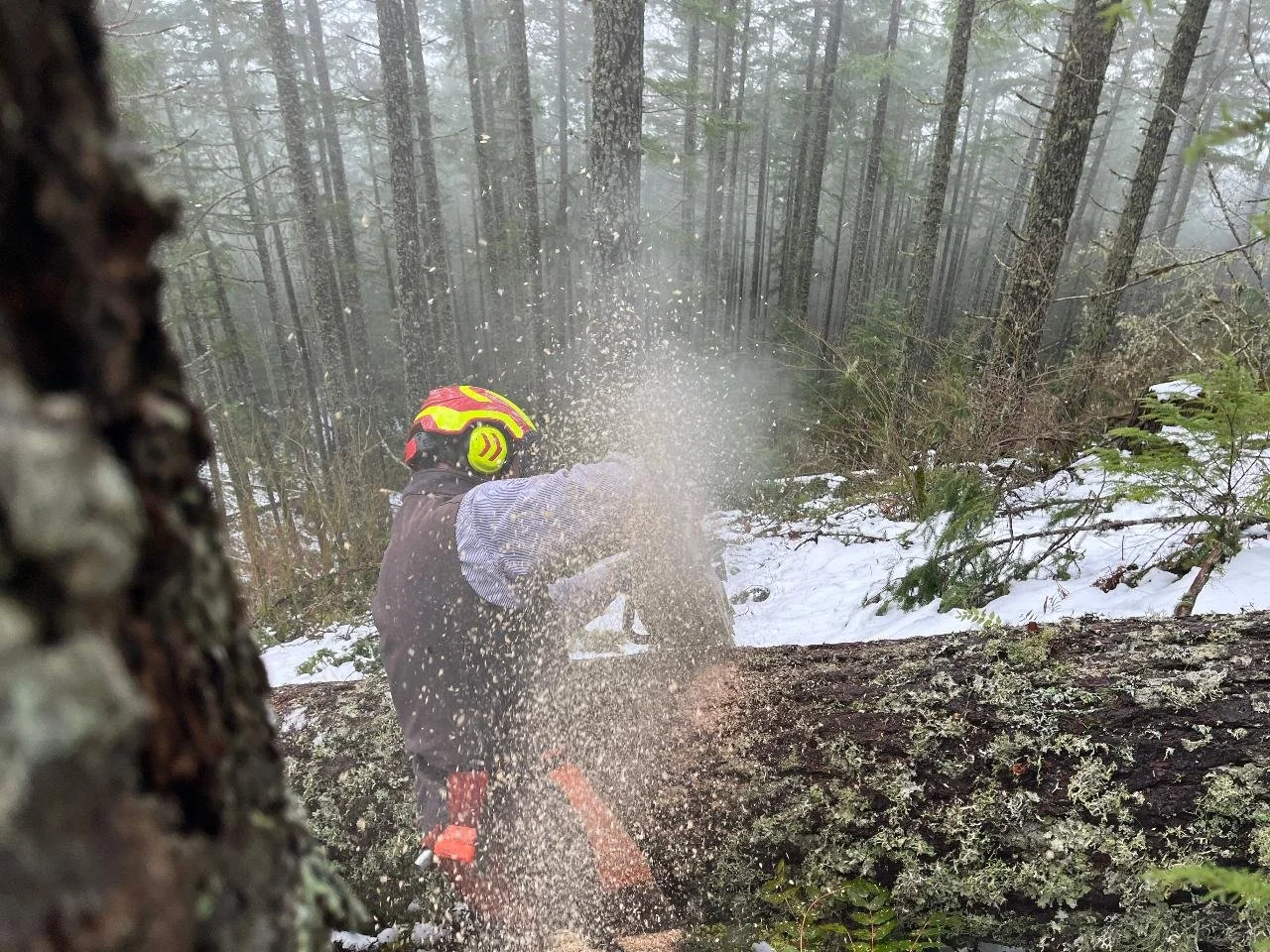
To advance to the B level, a sawyer needs to be able to confidently handle moderately complex scenarios, be comfortable with basic field maintenance of the saw, be well-versed in the USFS National Saw Policy, show leadership skills and a strong dedication to safety, and can mentor more junior sawyers. Most sawyers are satisfied to rise to this level and work as a saw team leader, but it is another big step up to be a C-sawyer. At this level there is a strict evaluation process under the eye of two highly proficient sawyers, and the C-sawyer will need to manage complex projects, be comfortable in a leadership role, show proficiency at evaluating A and B sawyers and show a willingness to be part of the sawyer education and training program.
One of the most important qualities of an educated sawyer is to have the self-confidence and humility to call a “no-go” when the situation just doesn’t feel right. On the most complex trees the crew might come back several times for another look and another opinion, and then wait to act until all the stars align—right talent on the crew, right tools, adequate weather and time of day, etc. And then of course some trees are left for Mother Nature to eventually bring to the ground where we can deal with them safely.
For me, the journey from first touch of a chainsaw to C-sawyer and instructor/evaluator had taken seven years and thousands of hours on trail. There are no shortcuts—it just takes a lot of time, repetition and patient mentoring for a newbie sawyer to mature into an expert. And for this to happen, the saw teams need exposure to increasingly complex scenarios, which is where Stahlman Point Trail comes in.
Cascade Volunteers has had an approved Forest Service Saw Training Program for seven years but our colleagues across the mountains in the Bend area have just completed their first season of classes. Over the years, sawyers from Central Oregon Trails Alliance (COTA) and Sisters Trail Alliance (STA) have collaborated with CV by helping out at trainings and sending sawyers to help with projects as needed, while CV has been a resource to COTA as their program started up. Sawyers working primarily in central Oregon rarely get a chance to work on trees of this size and complexity so it was a no-brainer to share the wealth and invite them to come and help.
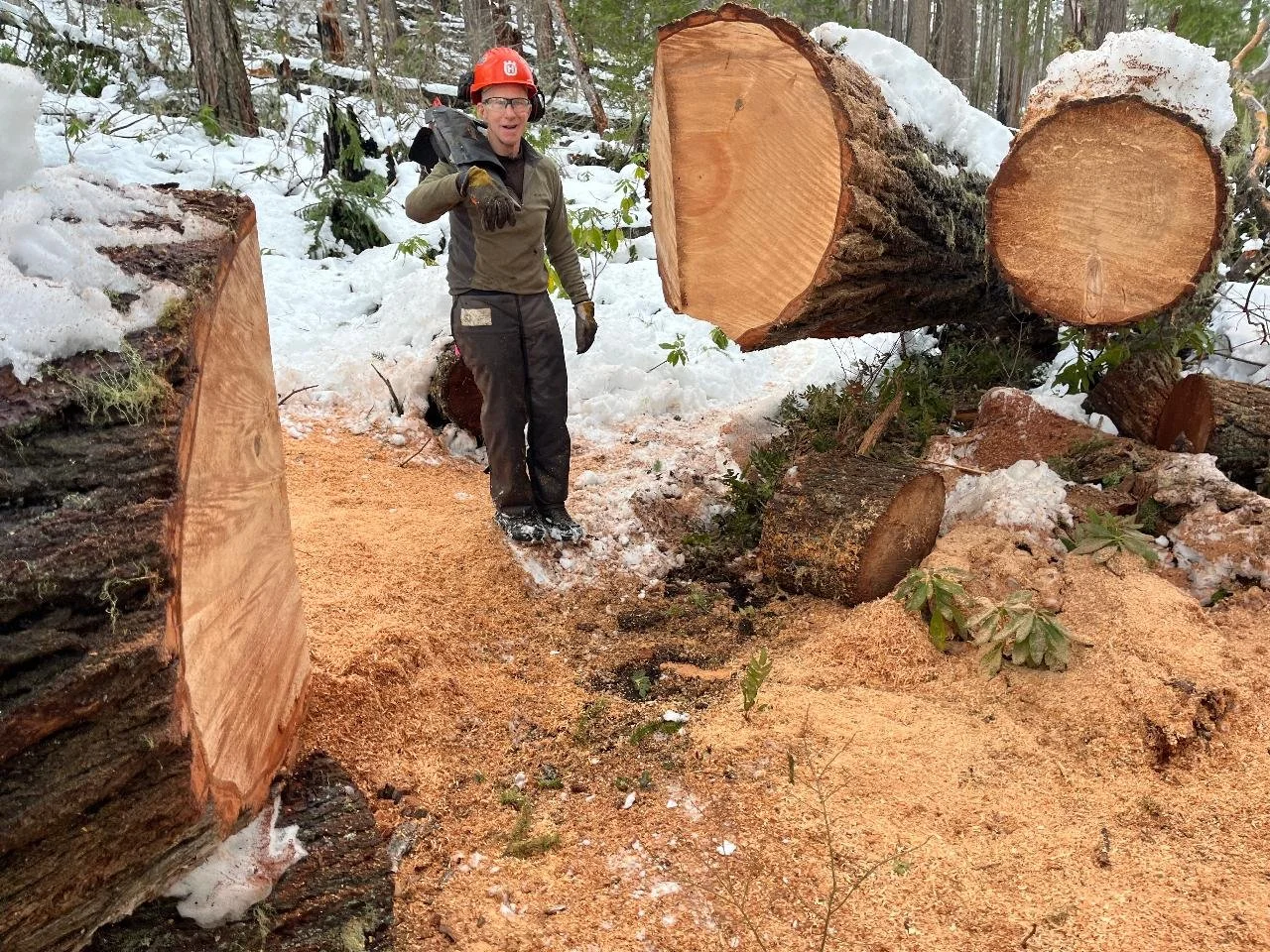
Volunteers drove from as far away as Bend, Redmond, Portland and all over the upper Willamette Valley to participate. Over the course of three days in mid-January, and following the snowstorm that ultimately dumped eight to ten inches of snow on the scene, a total of 16 sawyers and swampers (sawyers’ assistants) put in 210 hours of work and cleared the trail all the way to the summit. We worked in teams of three, each team consisting of a combination of seasoned C-sawyers and promising junior sawyers eager to expand their skillset.
Yes, we did clear the trees off the trail, but just as importantly, new friendships were forged, skills were sharpened and the bond between sawyers in the region were strengthened. In the weeks that have followed, volunteer sawyers from COTA and STA have continued to make the trip over the mountains to help clear multiple other trails that have up to 100 downed trees per mile. No doubt Cascade Volunteers sawyers will return the favor in the future when the tables are turned.
To learn more about Cascade Volunteers and how you can get involved, visit cascadevols.org, and find the them on social media on Facebook at Cascade Volunteers and on Instagram at @CascadeVolunteers.