
Rethinking BackCountry Nutrition
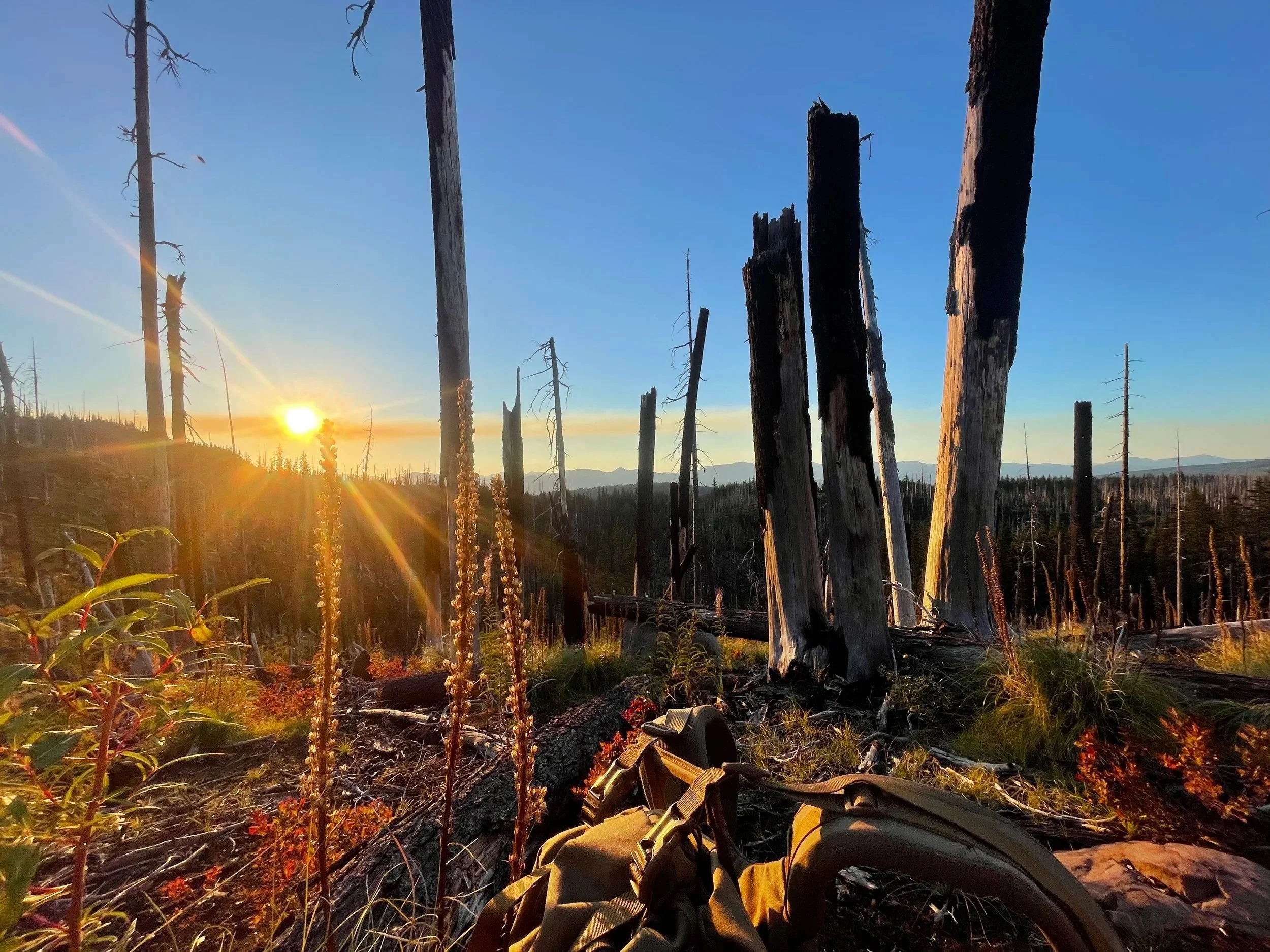
A break among the burn
While preparing for a recent long trail run, I was stocking up on snacks at the store and glanced in my cart after making a few laps. I cringed, realizing everything in the basket was essentially made from processed sugars. Yikes! It still surprises me that regardless of the brands or packaging, many of the most popular trail foods have disappointingly poor core ingredients. For decades, ultralight culture has quietly shaped what we think is “acceptable” to eat in the backcountry. We’ve been taught that the pinnacle of trail cuisine is whatever delivers the most calories with the least weight, no matter how processed, artificial, or gut-wrecking it might be. I’ve often been frustrated with the dichotomy that exists in the backcountry meal planning space: it isn’t a question of whether you sacrifice flavor, cost or nutritional value for weight, but to what extent. I’m also guilty of allowing my dietary self discipline to go out the window when on trail, as if normal dietary rules don’t really apply on backcountry trips. I subconsciously believe these trips are kind of like the holidays, and anything is justifiable. But I’m working to get better. I know that as I age I’ll have to work harder to physically perform at a high level, and I’ve started looking critically at all aspects of my backcountry preparation, both how I train and how I fuel my body.
Each of us has food preferences that extend to how we approach fueling while on trail - I have some friends who break out their recycled peanut butter jar & stubby wooden spoon on a day hike, and others who think nothing of packing a brick of cheese & 6 pack of beer on a multi-day backcountry trip. I have (more than once) even built a rock oven to bake trail bread while in the mountains. So I get that there is a ton of nuance when it comes to this discussion. However, if you type ‘backpacking food prep’ into the YouTube search bar you’ll see a proliferation of videos advocating for meal plans based on the single metric of ‘Calories Per Ounce’. And when you use Kcal/Ounce as your measuring stick, the types of foods that rise to the top of the list are highly processed. One meal planner was even advocating for candy bars and potato chips to supplement their ramen… Isn’t there a better way? Longevity in our outdoor lives matters, as many of us want to be trail running, biking, hunting, skiing, and exploring for decades, then our nutritional strategy has to evolve. The backcountry doesn’t have to be require a break from our values or our bodies’ long-term well being. In fact, it’s one of the places where nourishment matters most.
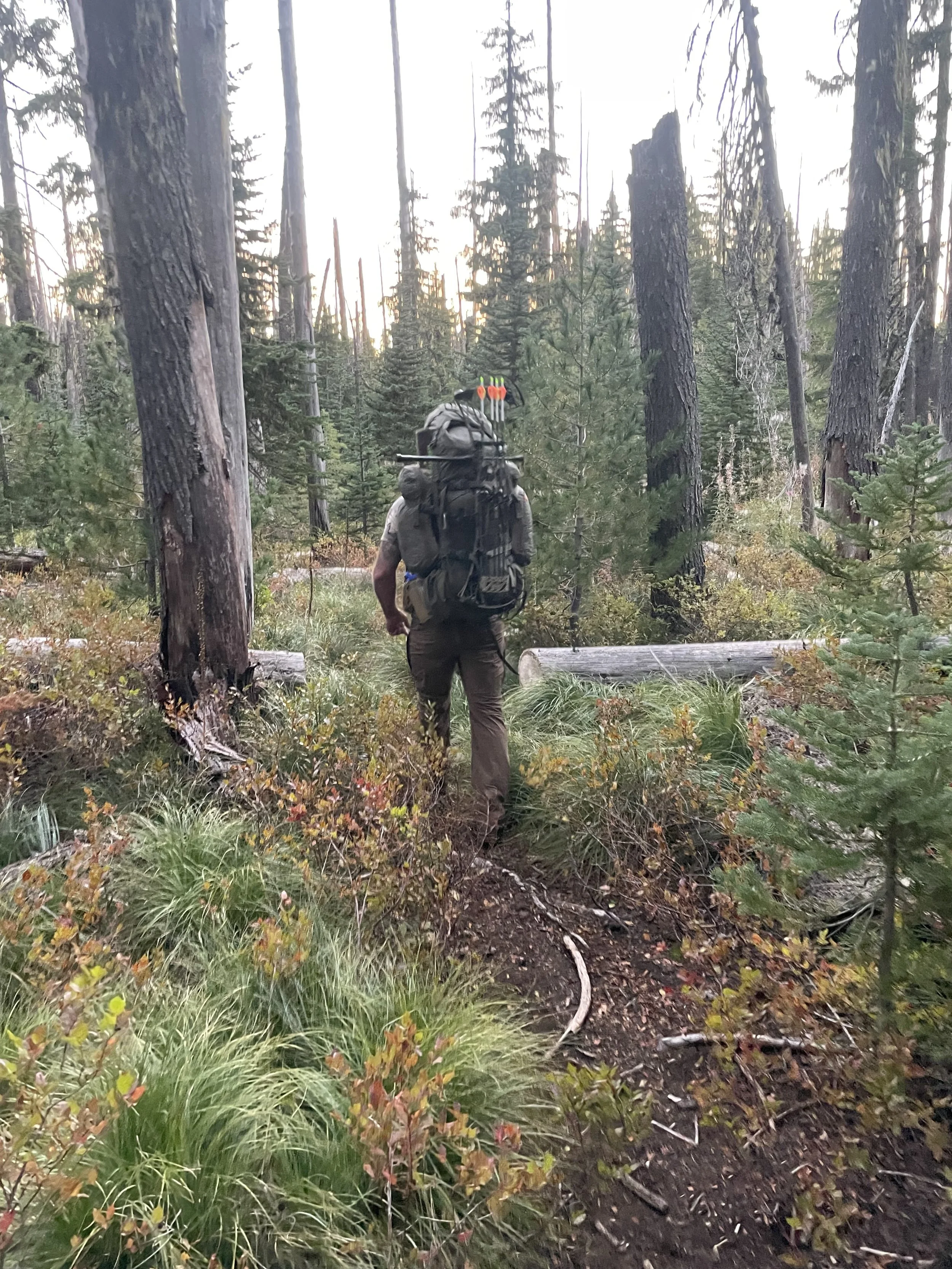
Hiking in
Imagine the following scenario (totally hypothetical, of course):
You wake up at zero-dark-thirty to drive into the mountains and bag a new summit. Before you hit the edge of town you realize that the quick cup of yogurt you ate at home might not be enough, so you swing through a fast food drivethrough to grab a few breakfast burritos… I mean, you don’t normally do this but today is an adventure day, so it doesn’t technically count, right? At the trailhead you crush a quick snack bar and swig the last of your coffee, then packs on as it’s starting to get light out. At the summit you celebrate with another snack bar and split the beer your trail partner brought along. It’s almost noon. Back at your rig you have a sandwich waiting for you in your cooler. On the drive home you stop for burgers and fries, and start plotting your next trip…Sound familiar?
Why should the quality of our food matter? If you wouldn’t eat trash for your day-to-day nutrition, should you be on the trail? The idea that “healthy food is too heavy” has become so ubiquitous it’s practically treated as trail gospel. But when we zoom out, the logic falls apart. Weight matters, yes, and having our food be calorie dense matters too, but they’re not the only metric that count.
This past year I started taking a closer look at what I ate on backcountry trips. I asked Nicole Joyce, a nutritional expert and digestive health coach for help understanding better ways to fuel during these expeditions, and she shared some mind boggling insights.
Why Digestive Health Matters for Outdoor Athletes
Nicole’s core message: your digestive system is the gateway to every usable calorie, nutrient, vitamin, and mineral you depend on in the backcountry.
If your digestive system isn’t functioning well, you simply do not access the full value of what you eat. Ultra-processed snacks or foods that irritate your system can cause energy crashes, urgent latrine trips, or poor nutrient absorption—essentially reducing the usable fuel you have available right when your body is under its highest stress load. What’s worse, even if you are carrying quality food with you, a poorly functioning digestive system won’t be able to optimize the full value of that food. So part of our backcountry planning should include living an off trail lifestyle that sets us up for success when we do head for the mountains.
By its very nature, backcountry travel increases stress on the body, elevates adrenal demand, and accelerates nutrient turnover. When we are active in the outdoors we are typically performing activities that take us out of our comfort zone, and our bodies need to be able to recover quickly in order to maintain a high level of performance. Our bodies are under different levels of stress (sleeping on the ground, carrying weight, living at elevation, exposure to the elements, etc.) We are handicapping ourselves by not giving our bodies what they need. And it isn’t only about calories, it’s supporting our adrenal function via proper electrolyte usage, and avoiding creating more stress for our digestive system by not fueling with low quality food. This is especially true on trips longer than 4 or 5 days. So eating foods that deplete or distress digestion compounds the problem and erodes performance, endurance, and long-term resilience.
Which makes sense. But what Nicole taught me was that it isn’t only the quality of the food that we eat during our trips that is important. The health & vitality of our digestive system starts before we leave the house. A person with a healthy or high functioning digestive system will be able to extract more nutrient value from their food during outdoor activities than a person with an average or low functioning digestive system, regardless of how good the food is that you bring with you.
While everyone’s body needs slightly different things to perform the best, Nicole did offer a few core guidelines to set yourself up for success on and off trail. Our goal should be to eat a diversity of foods that support the microbes in our gut. A healthy & diverse microbe community equals a higher rate of nutrient absorption. The same habits that improve everyday digestive health also boost endurance and nutrient absorption in the backcountry.
Nicole recommends:
25–40g of fiber per day, progressively increasing toward 40g.
40 different fiber sources per week to support microbiome diversity. (For example, instead of cooking with just yellow onions, start mixing in white onions, red onions & scallions, as each different variety offers a different source of fiber and supports a slightly different microbial community. The more diverse the fiber, the more resilient your digestive health).
Prioritizing whole fruits, vegetables, legumes, oats, nuts, seeds.
Minimizing saturated fat and ultra-high protein diets like carnivore/keto, which feed pathogenic bacteria.
Modeling intake after the Mediterranean diet:
High plant diversity
Quality vegetable oils or minimally processed fats
Limited saturated fats
Moderate, high-quality protein
These principles help outdoor athletes extract more usable energy from food with less digestive strain.
Nicole compares our digestive system to a campfire. During outdoor activities It’s OK to use fast burning fuels to get our system started, but we need more than kindling to sustain us, or else we will flare out. Processing stress, altitude, cold temperatures, and long days take a toll on the body, and low-quality food compounds that stress. The difference between fueling with slow-burning whole foods versus quick-spiking sugar bombs becomes clear around hour four of a bike ride or mile twelve of a long run. But it really comes into focus on multi-day adventures, or when you’re on longer expeditions.
For longer or more demanding outings, Nicole recommends centering meals around:
Protein – provides structure and satiety; slows digestion for sustained energy.
Healthy fats – the “slow-burn logs on the fire” that extend energy supply without frequent eating.
Fiber-rich (think un processed) carbohydrates – slow absorption, stabilize energy, and nourish the microbiome.
This combination provides a steady burn rather than the spike-and-crash of simple carbs.
Carbs alone may burn through in as little as one hour, depending on the person, whereas fats and proteins improve nutrient extraction and slow digestion in a beneficial way.
Carbs = paper & kindling to get things fired up
Protein + healthy fats + fiber = hardwood logs for an extended burn
If you have a healthy digestive system, foods that slowly work through your body give you a better chance of extracting more energy and nutrients than foods that pass through you quickly. That’s why digestive health plays such a critical role in our ability to get the most out of the food we are carrying with us.
Starting with your macro-nutrients, begin with a lightweight base carb (like instant rice, couscous, oats, or dehydrated potatoes), add a nutrient-dense protein and fat source (dehydrated beans, freeze dried meats, powdered nut butters, packaged tuna or salmon, avocado oil packets, ghee), include sources of fiber like dried veggies, and finish with micronutrient “boosters” (dried greens, mushrooms, spices, seaweed, or concentrated electrolytes). These combinations deliver stable energy and satiety without requiring complex cooking or heavy gear.
Whole-food-based meals keep blood sugar more stable, reduce GI distress, and support faster recovery. They also allow athletes to stack big days without the cumulative crash that often comes from a diet of gels, bars, and candy. Longevity is physiological.
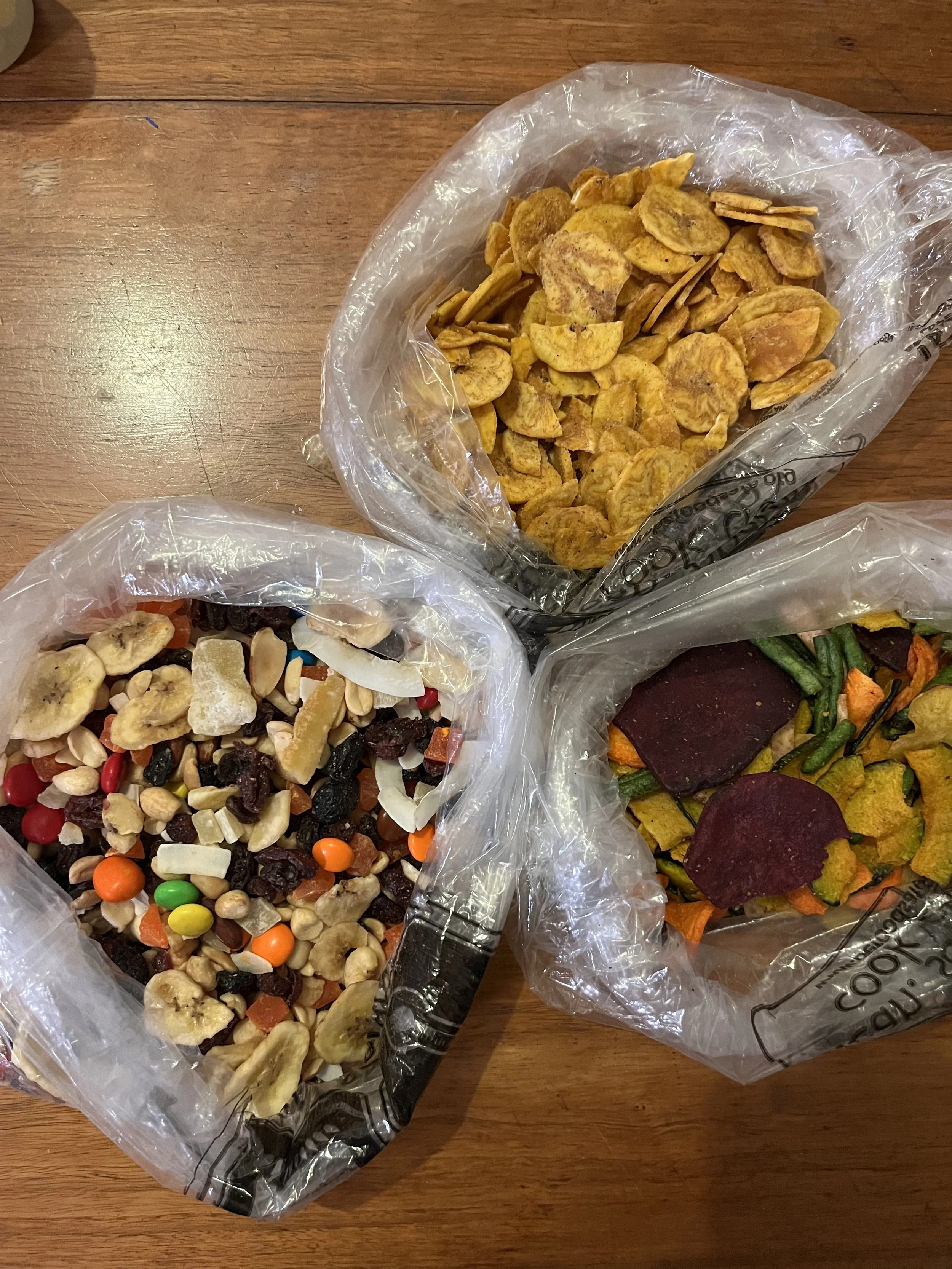
Snacks for the backcountry traveler
I had been reading about the importance of fiber in our diet, so I asked Nicole about it. Fiber is the “food” for your microbiome, and Nicole emphasizes that most Americans are chronically under-consuming it. On trail, fiber becomes even more critical for stable energy (helping ‘slow the burn’) & improve better nutrient extraction. It also helps improve our digestion over time (avoiding both diarrhea and constipation).Her recommended lightweight options? Dried legumes, dried fruits, dried vegetables or mushrooms, whole grains such as oats or quinoa, seeds (chia, flax, sunflower) in small quantities & overnight oats to retain resistant starch (extra fiber that increases satiety and blood-sugar stability). These all pack well, work with DIY dehydrated meals, and avoid the crash-prone nature of processed starches.
Fuel quality influences your digestion, inflammation, energy stability, and recovery. Cheap calories can get you through an adventure, but they rarely help you perform at your best or return to the trail tomorrow feeling great. When we rely on ultraprocessed foods simply because they’re light, we’re training our bodies for the opposite of longevity.
The good news? Eating well in the backcountry doesn’t require lugging around a Dutch oven or sacrificing precious pack space. It just takes a shift in strategy. Many nutrient-dense foods are, by nature, lightweight and stable (think dehydrated lentils, rolled oats, nuts, seeds, spices, dried vegetables, and powdered broths). When combined with a thoughtful approach to macronutrient balance, you can create meals that don’t sacrifice pack weight and still taste great, and leave your body feeling supported. Ultralight and healthy aren’t opposites.
Designing backcountry meals isn’t complicated when you use a simple framework: Easy prep + whole-food ingredients + low weight.
Armed with Nicole’s advice, I revisited some of my favorite backpacking meals and made a few adjustments, Here is what I came up with as a meal plan for a 3 day hunting trip:
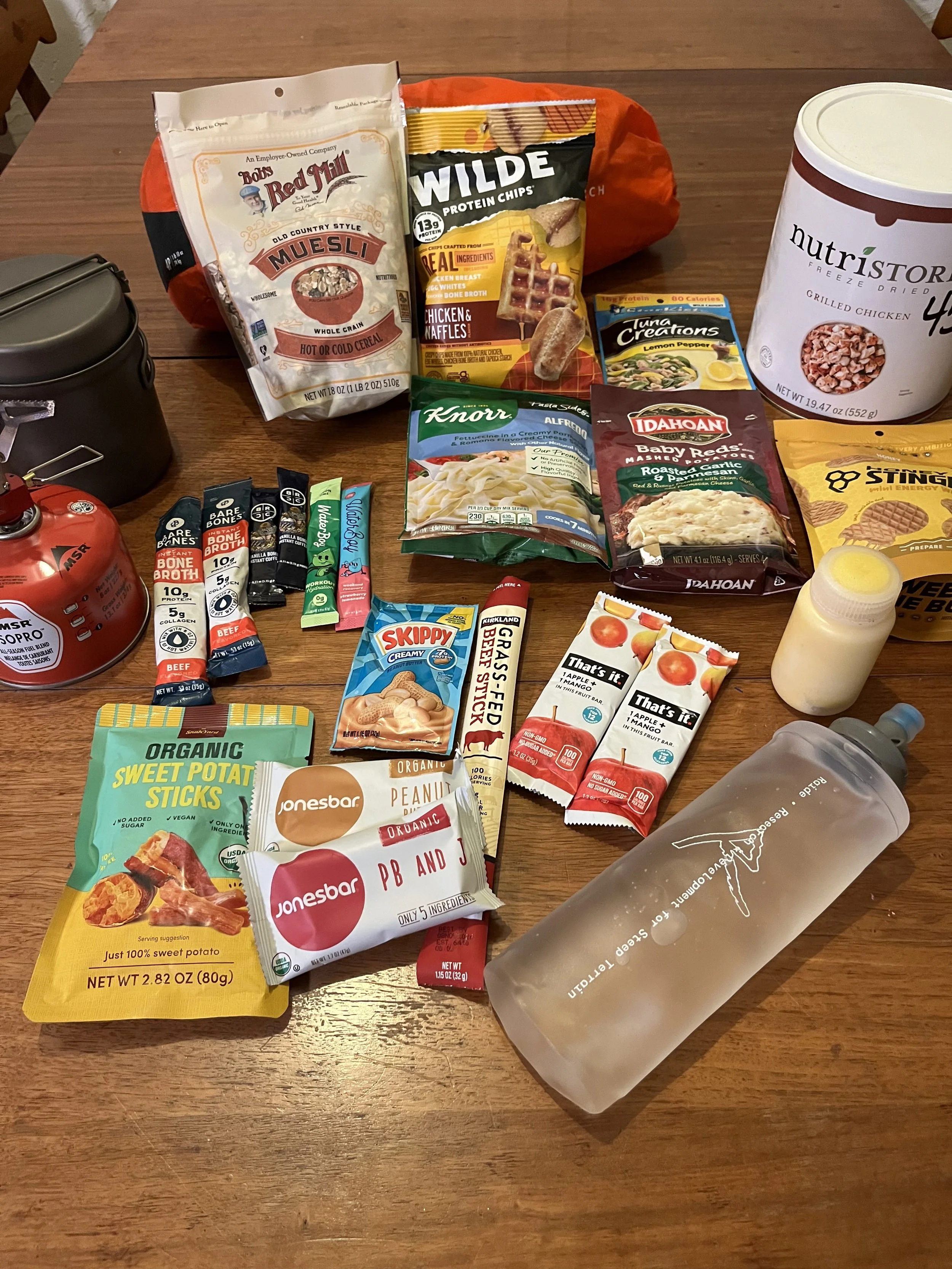
Backcountry nutrition, ready to be packed
Breakfast all 3 days:
Overnight soaked Muesli mix (oats, wheat, barley, rye and triticale, sweet dates and raisins, crunchy sunflower seeds, almond slices and walnut pieces, flaxseed meal)
Instant coffee packet & ghee ‘creamer’ (I love butter in my coffee)
Lunch all 3 days (I snack on my lunch while on the move):
2 wholegrain tortillas + nut butter packet or tuna packet
6oz jerky/pepperoni sticks
2 cups of ‘custom’ trail mix from the Winco bulk food aisle (mixed nuts, tropical dried fruit, peanut M&Ms, + spicy plantain chips for a little salty kick)
2) granola bars (I prefer Bob’s Red Mill or similar)
2) Electrolyte drink packets
Dinner (I come up with a different meal for each dinner to keep things interesting):
1 Bone broth or Miso packet to sip on while dinner cooks
3oz freeze dried meat (Costco sells bulk freeze dried chicken breast, ground beef & pulled pork)
4oz dry Quinoa
2oz dried veggie medley (Winco bulk bins)
A mix of powdered coconut, powdered peanut butter, dried parmesan cheese, curry powder & red chili flakes + dried herbs, salt & pepper to taste
Olive oil packet
Total daily weight 1.8lbs, Approx calories: 2,800-3,000, Approx cost = less than $15 per day
I will keep my breakfasts & lunches the same for the trip, but vary the dinners using the same strategy (freeze dried meat + starch + dried veggies + Fat + homemade flavors that deliver a different theme), and I like to combine each day’s meals into a gallon zip bag to create individual daily ration packages to simplify pack organization.
Backcountry food shouldn’t be something we endure, it should deepen the outdoor experience. When we treat nutrition as part of our long-term performance and wellbeing, we remove the pressure to suffer through low-quality fuel just to save an ounce or two. It’s also OK to not be perfect, but rather work towards improving the way we fuel our adventures. If we want to keep running ridgelines, pedaling singletrack, climbing summits, and exploring wild spaces for decades, then how we nourish ourselves today matters. Eating well in the backcountry isn’t indulgent, and it doesn’t have to blow our budgets, but it is a form of stewardship for the body that we love.
Nicole Joyce is a Certified Healthy Gut Coach who specializes in Microbiome Restoration and Digestive Disorders - guiding clients to real relief through functional nutrition, testing, and personalized plans. Find her at nicolejoycehealthcounseling.com